Surviving in the Shadow of Peace
Since the 2023 offensive that forced over 100,000 ethnic Armenians to flee Nagorno-Karabakh, Armenia has been stuck in a heavy, uncertain limbo. The project Surviving in the Shadow of Peace tracks this period through 2025, capturing a country where the "end" of a war doesn't actually mean the start of peace. Even with a tentative deal signed in August 2025, the atmosphere on the ground remains thick with skepticism. This isn't just a political timeline; it’s a story about a people living along a tense frontier, where mountain outposts sit right next to quiet farmhouses, and every family is weighing the hope of a future against the very real scars of the past.
The work moves between the frontlines and the kitchen tables of those who lost everything. You see the faces of the 100,000 who crossed the border with nothing but what they could carry, now trying to build "normal" lives in temporary housing while mourning the homes they left behind. It documents the volunteers training in the ridges and the young veterans navigating life after service, alongside the quiet, daily grief found among the rows of graves at Yerablur military cemetery. By blending these raw portraits with the stark landscapes of the South Caucasus, the project captures the duality of Armenian life—a constant state of being prepared for the worst while stubbornly working for the best.
Ultimately, this is an attempt to pull Armenia out of the periphery of global attention. While the rest of the world focuses on larger geopolitical theater, the South Caucasus remains a critical crossroads where local shifts have massive ripples. We’re looking at a nation forced to negotiate its own identity and survival in a region where rival powers are always jockeying for control. This project is a witness to that struggle, showing that the human cost of displacement and the "fragile peace" of 2025 isn't just a headline—it's a lived, breathing reality for a people who refuse to be erased from the map.
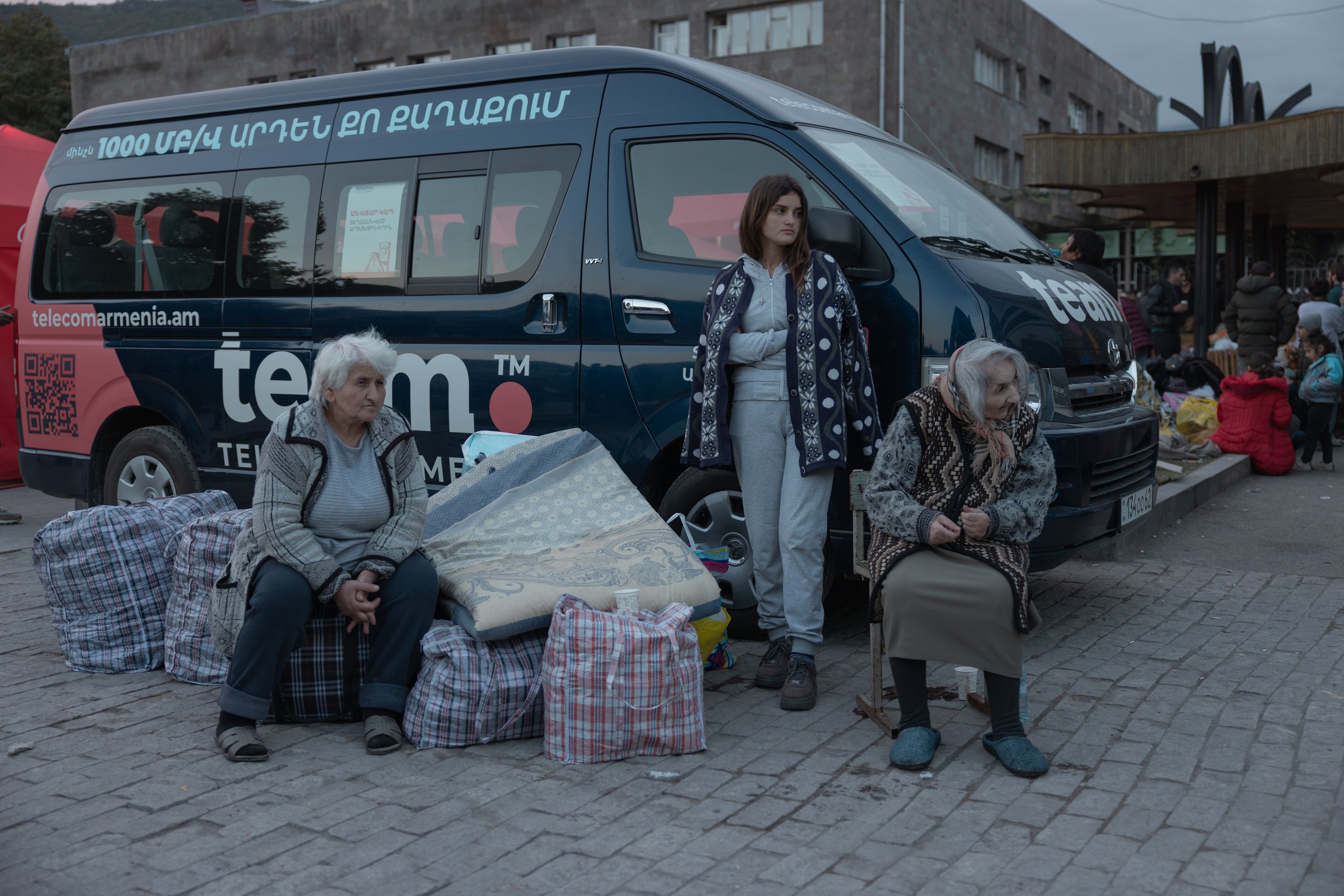
Forcibly displaced Armenians from Nagorno-Karabakh arrive in Goris, Armenia on 26 September 2023 with their personal belongings after crossing the Hakari Bridge along the Lachin Corridor following Azerbaijan’s military offensive on the region on 19–20 September leading to the displacement of over 100,000 ethnic Armenians.
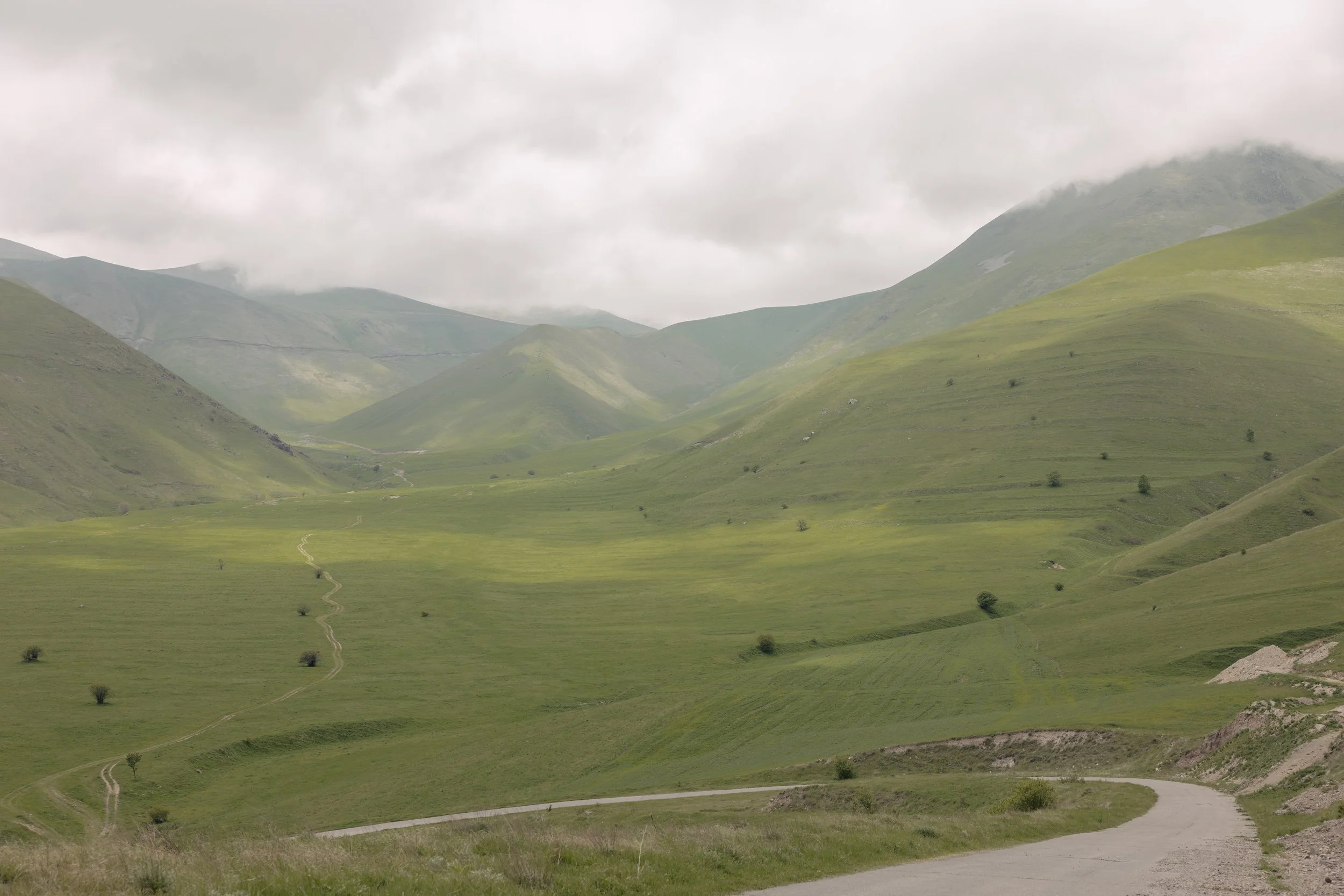
Between the border villages of Khoznavar and Khnatsakh in Armenia’s Syunik Province lies picturesque rough roads, dry earth, and hills that conceal more than they reveal on 17 May 2025. Though at first glance the scene appears calm, the calm is deceptive, Azerbaijani military positions lie just beyond the hills alongside Armenian positions, and the threat of sudden gunfire looms over this ground. Residents of these border areas have reported frequent shootings and cross‑border fire in recent months, underscoring the fragility of any lasting peace between the two neighbors.
For villagers navigating these remote areas, daily routines, tending to fields and livestock or visiting family, unfold under the constant shadow of border tensions. This photograph captures more than barren terrain; it reflects the fragile quiet of a region where peace can be shattered at any moment.
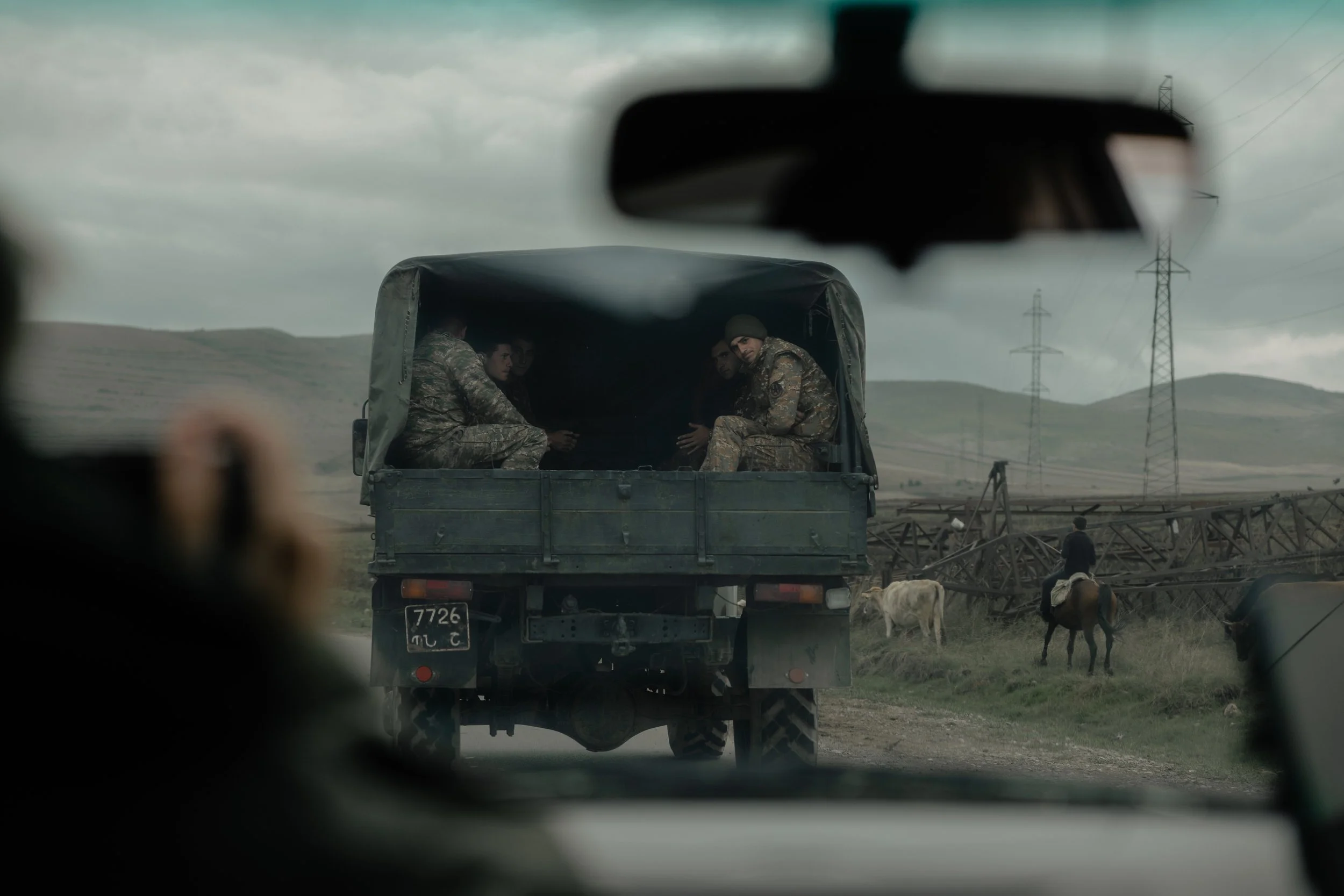
Armenian soldiers travel away from the border with Azerbaijan in Kornidzor, Armenia on 26 September 2023 as ethnic Armenians displaced from Nagorno-Karabakh cross into Armenia following a large-scale Azerbaijani military offensive days earlier, part of a mass exodus that forced more than 100,000 civilians to flee their homes.
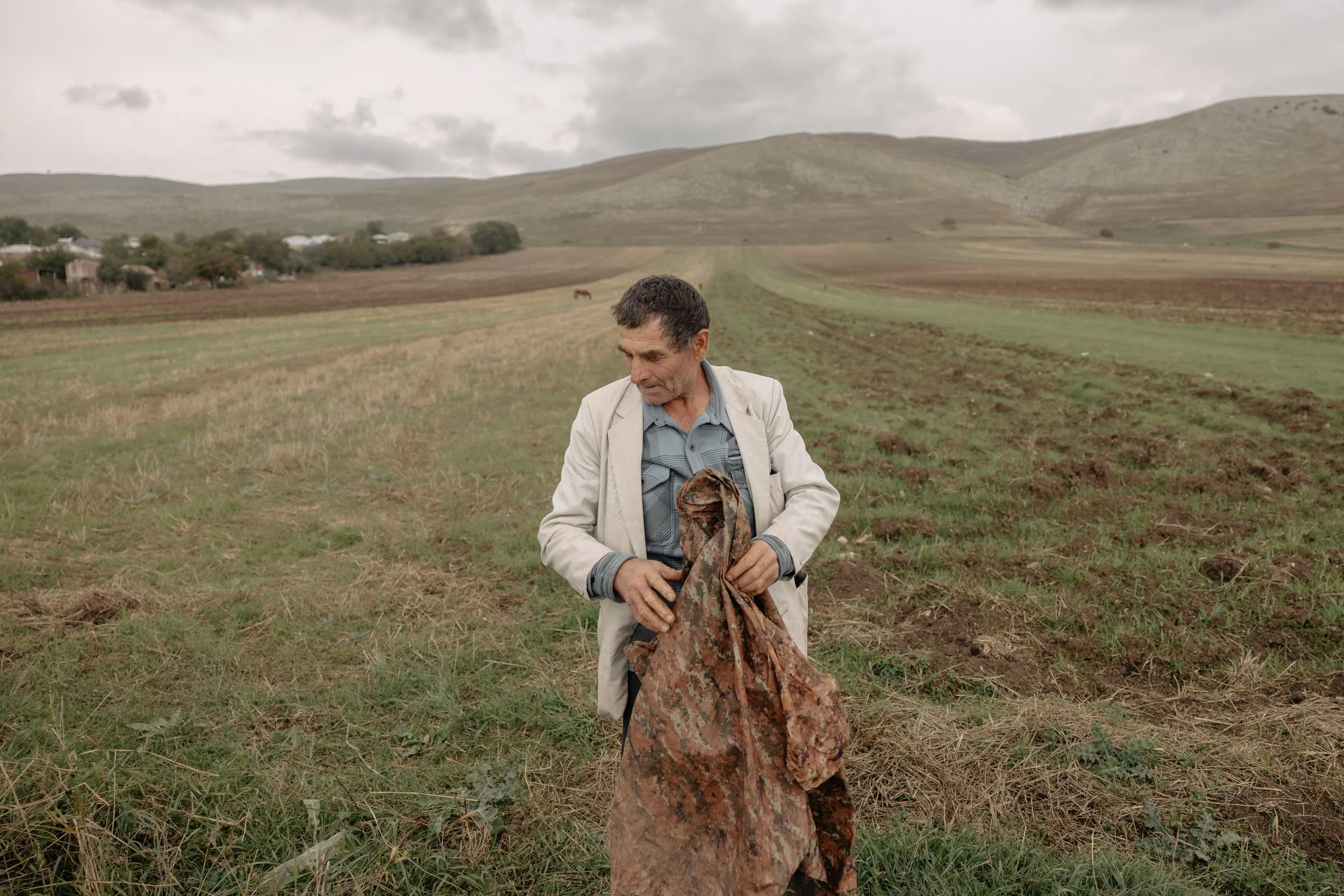
An agricultural worker removes his military jacket in Kornidzor, just kilometers from the border with Azerbaijan on 25 September 2023 after Azerbaijan declared full control over Nagorno-Karabakh, reflecting the uncertainty and shift in military and civilian roles as Armenians confront the collapse of long-standing territorial status and the mass displacement of ethnic Armenian civilians following the lightning Azerbaijani offensive.
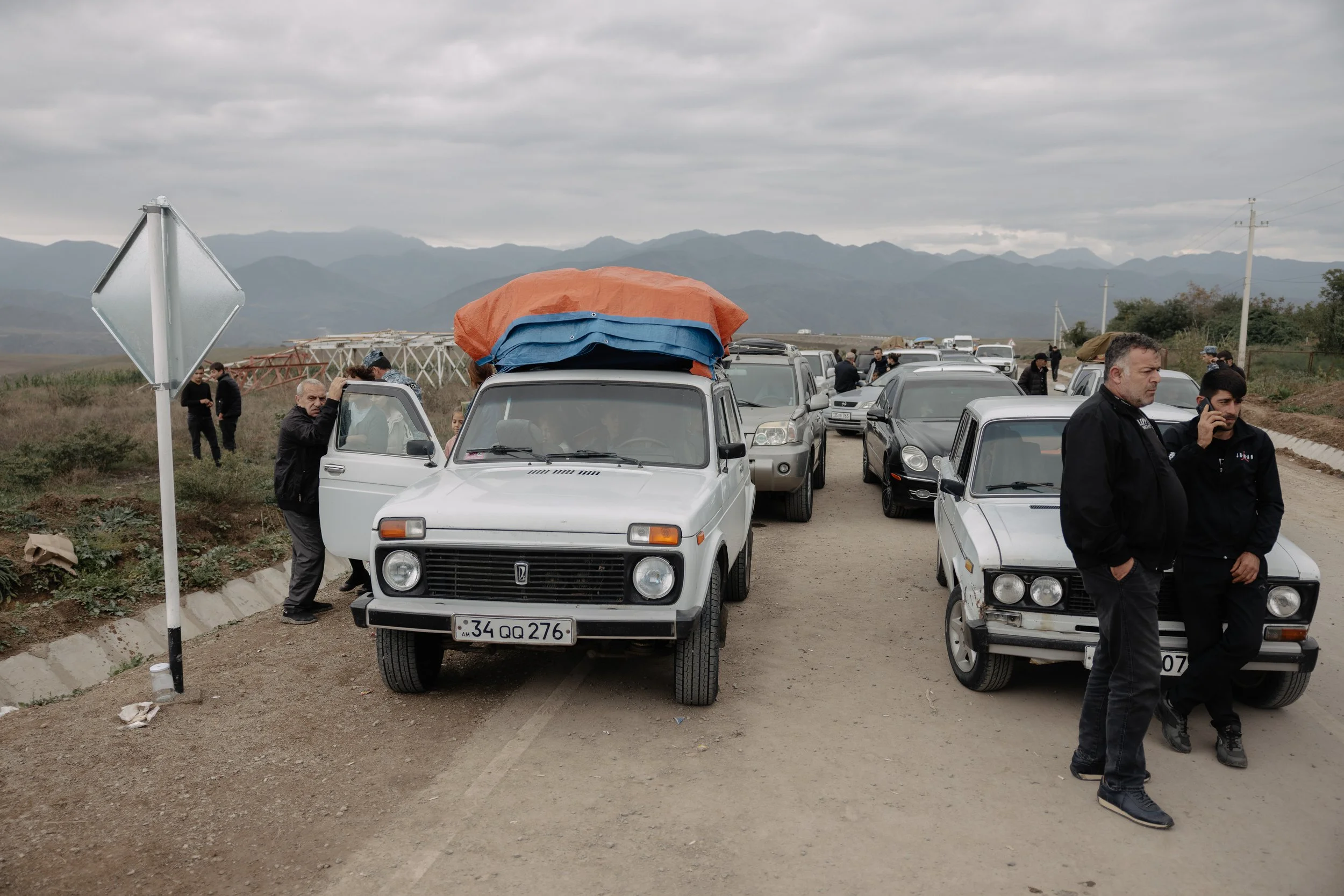
Civilians with their personal vehicles wait to cross into Kornidzor, Armenia on 26 September 2023 with the mountains of Nagorno-Karabakh visible behind them, having endured days in traffic at the Lachin Corridor and Hakari Bridge following Azerbaijan’s offensive to retake Nagorno-Karabakh on 19–20 September 2023.
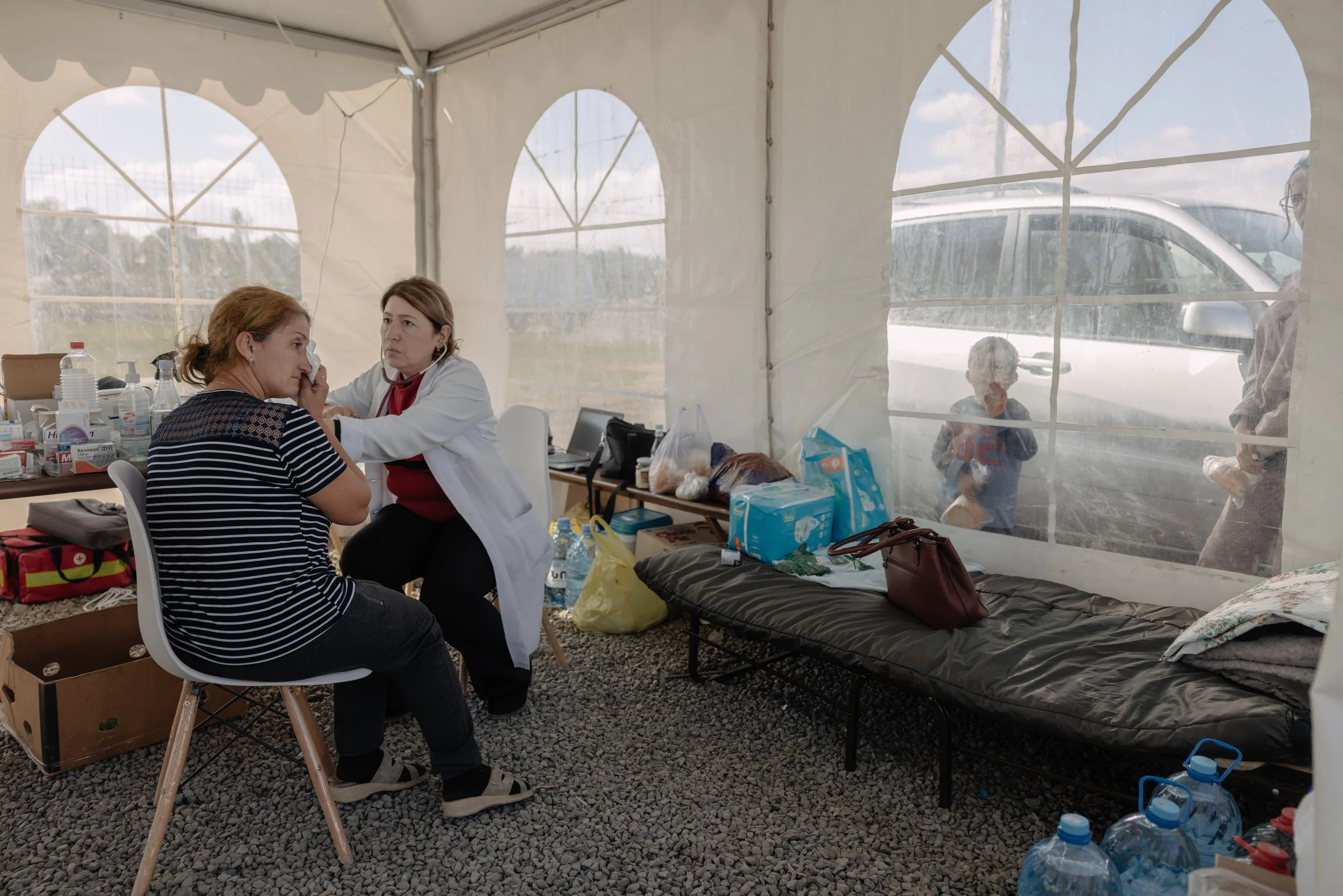
A mother receives medical treatment in a border medical tent as her children watch outside in Kornidzor, Armenia on 26 September 2023 amid the mass displacement of Armenians from Nagorno-Karabakh where tens of thousands men, women, children and the elderly endured up to several days in traffic before crossing through the Azerbaijani controlled Lachin Corridor, a once lifeline into Nagorno-Karabakh prior to a December 2022 blockade.
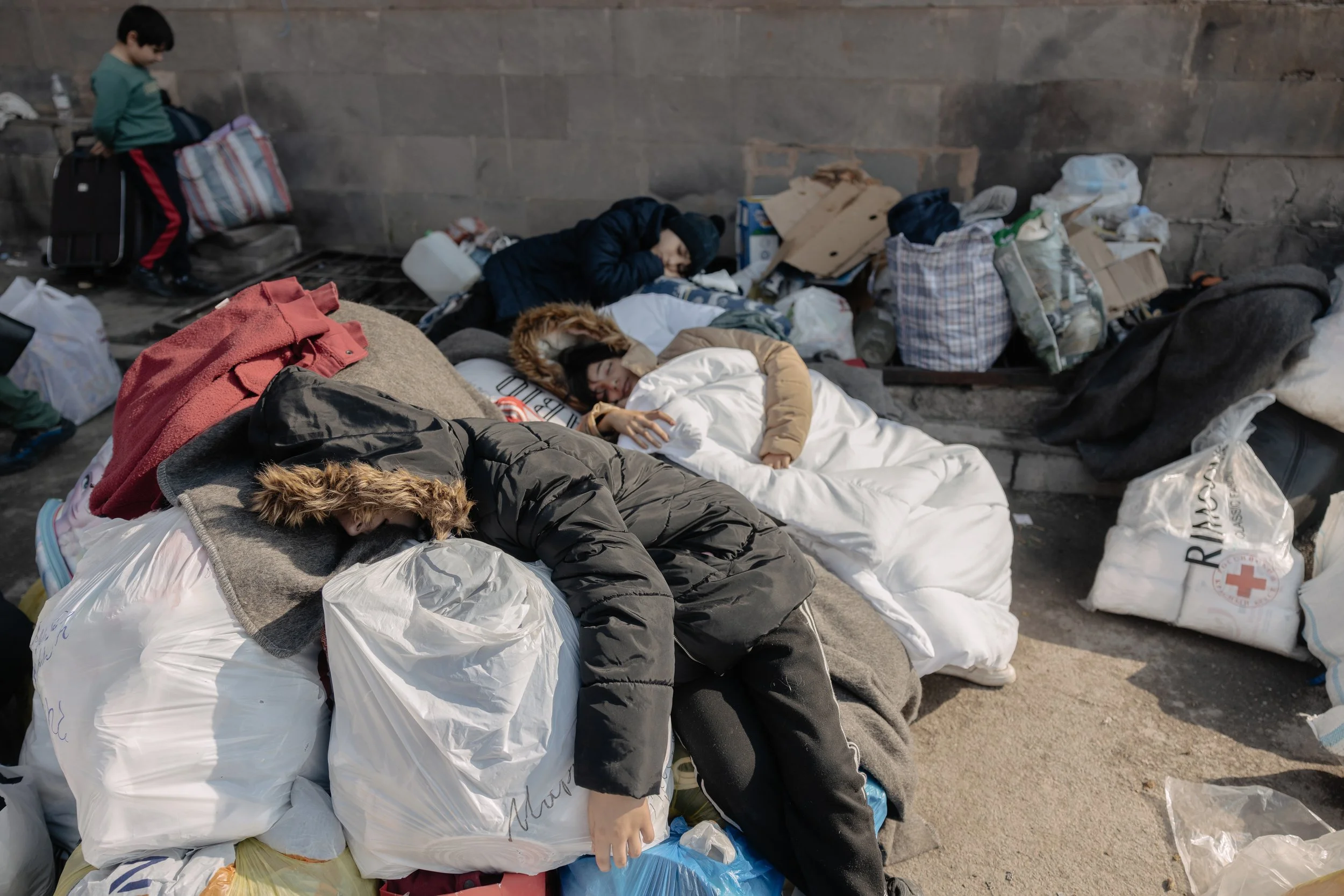
Children sleep outside the cultural center converted into a reception center for Armenians arriving from Nagorno-Karabakh in Goris, Armenia on 29 September 2023 where displaced families receive temporary housing, medical care and documentation after fleeing a rapid Azerbaijani military offensive.
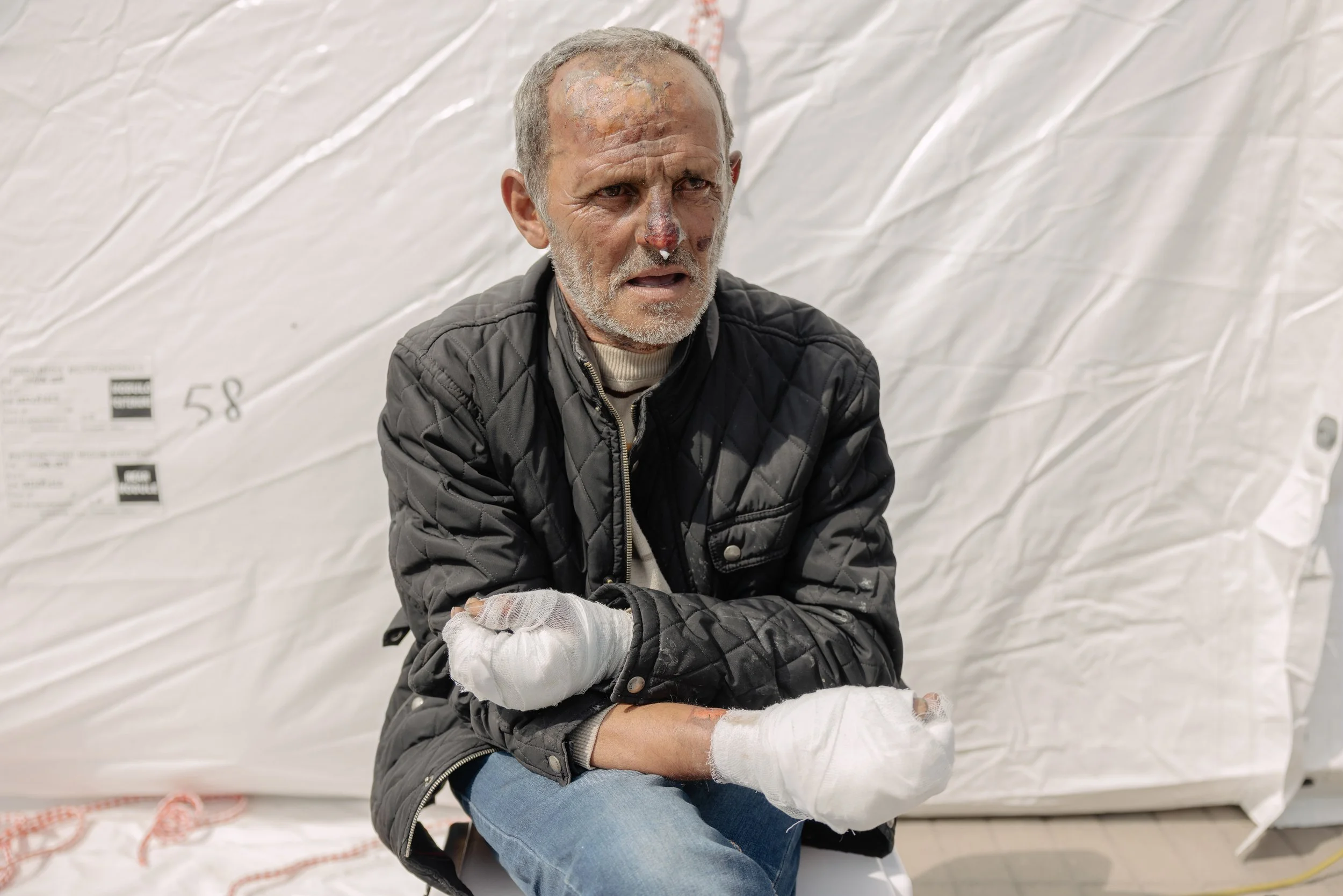
Samvel, one of dozens of burn victims, rests after receiving medical treatment in Goris, Armenia on 29 September 2023 following a deadly explosion at a fuel depot near Stepanakert, the capital of Nagorno-Karabakh, on the night of 25 September. The blast occurred as hundreds of people waited for scarce gasoline to fuel their vehicles for the journey toward Armenia during the mass exodus that followed Azerbaijan’s military offensive against Nagorno-Karabakh days earlier.
The explosion took place at a gasoline warehouse located approximately six kilometers outside Stepanakert, amid the rapid collapse of Armenian governance in the region and the displacement of more than 100,000 ethnic Armenians within the span of a week. The exodus followed months of blockade of the Lachin Corridor, the only road and lifeline connecting Nagorno-Karabakh to Armenia, which had severely restricted access to food, fuel, medicine, and humanitarian aid.
Local authorities reported at least 218 deaths and more than 120 injuries, with many victims suffering severe or life-threatening burns. Survivors were evacuated to medical facilities across Armenia, including Goris, as the humanitarian crisis intensified alongside one of the largest forced displacements in the region since the 2020 war.
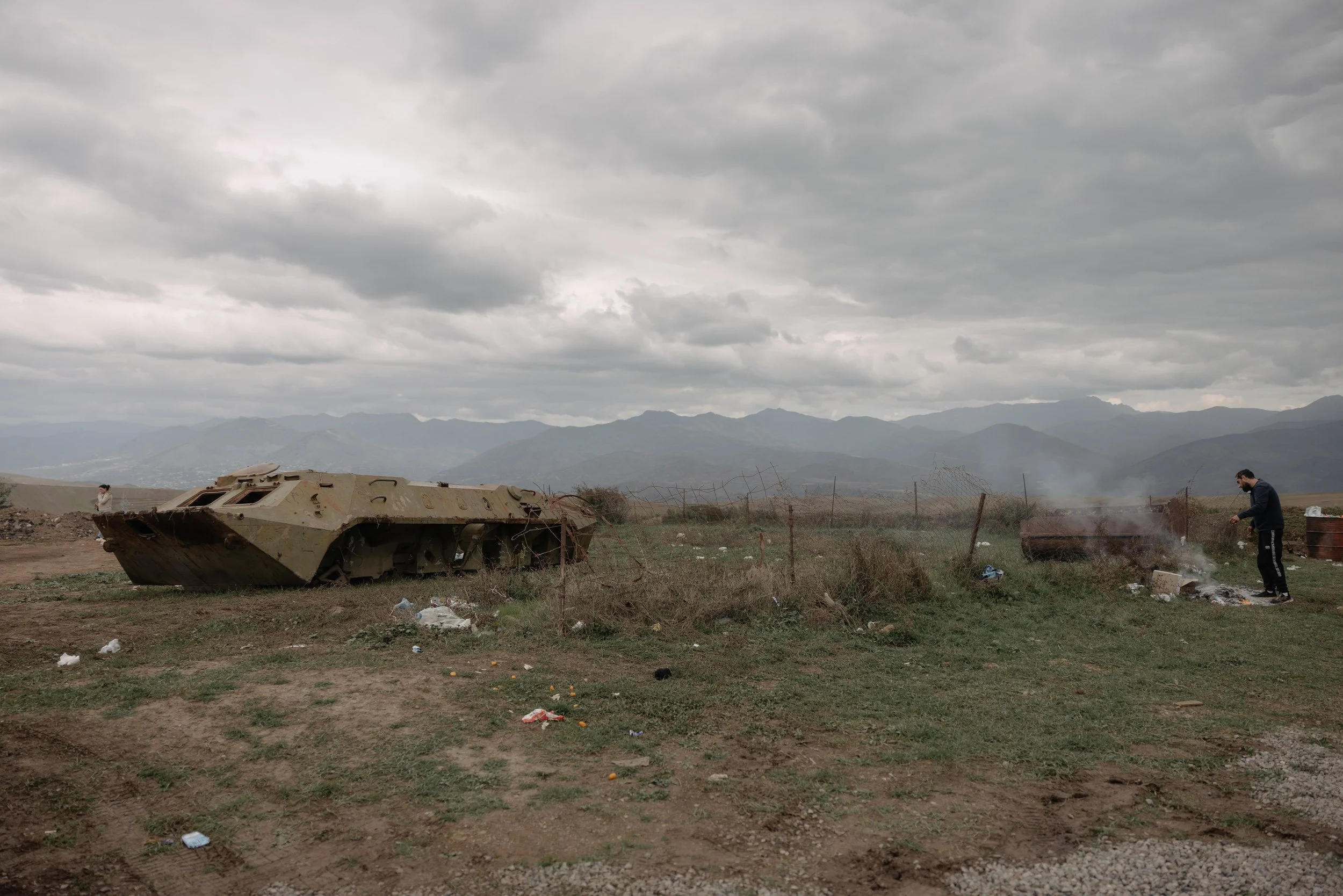
A recently displaced resident of Nagorno-Karabakh burns personal belongings and trash near a battered and abandoned Soviet BTR personnel carrier on the border with Azerbaijan outside Kornidzor in Syunik Province, Armenia on 26 September 2023 during the mass exodus of ethnic Armenians following Azerbaijan’s military offensive in September 2023 that forced over 100,000 people to leave their homes.
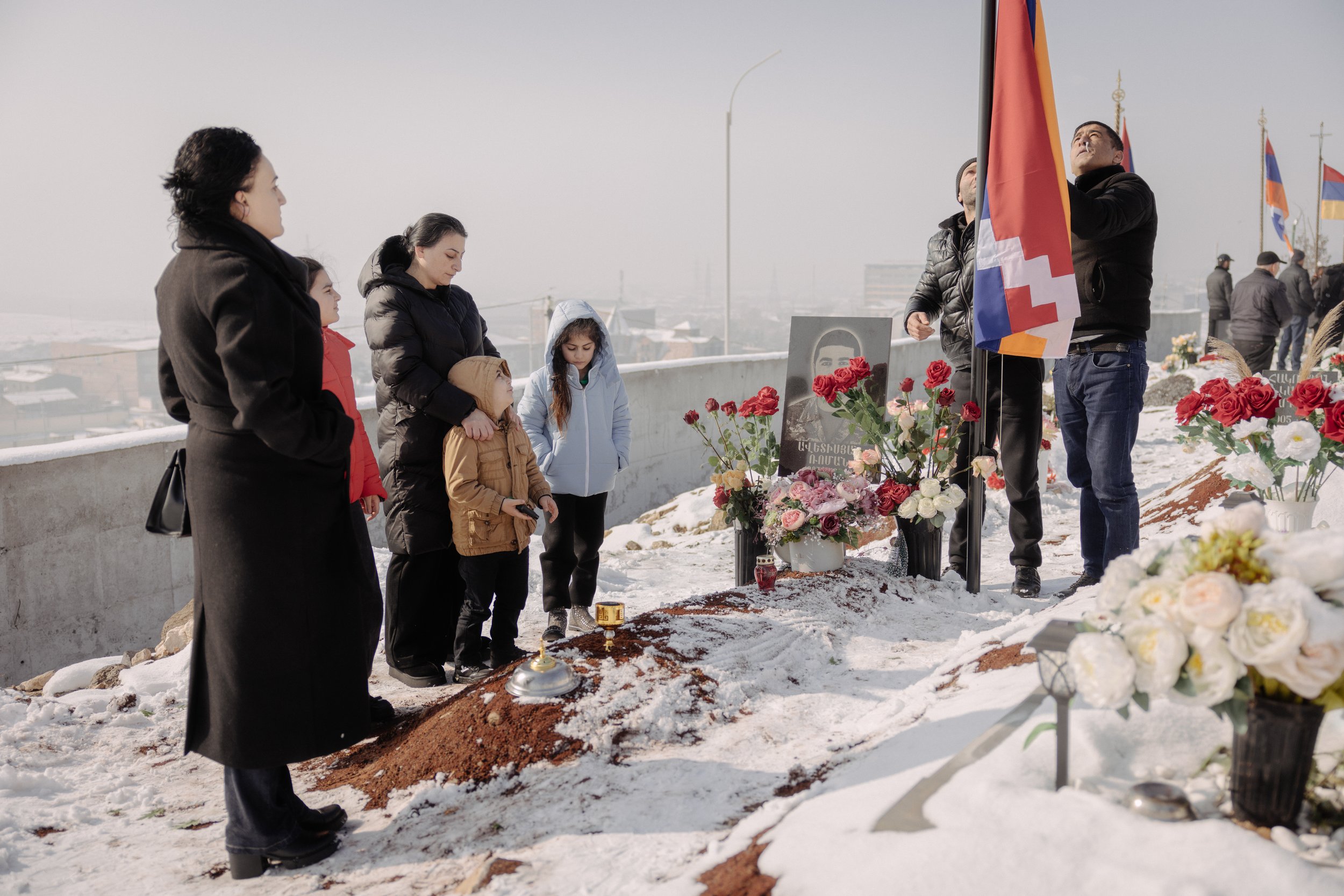
On 28 January 2024, a family gathers at the grave of their father at Yerablur Military Memorial Cemetery in Yerevan, Armenia, one of many victims of the 2023 conflict in Nagorno-Karabakh. In September 2023, a swift military offensive by Azerbaijan against Nagorno‑Karabakh triggered a mass exodus of ethnic Armenians, with more than 100,000 people forced to flee their homes and ancestral lands.
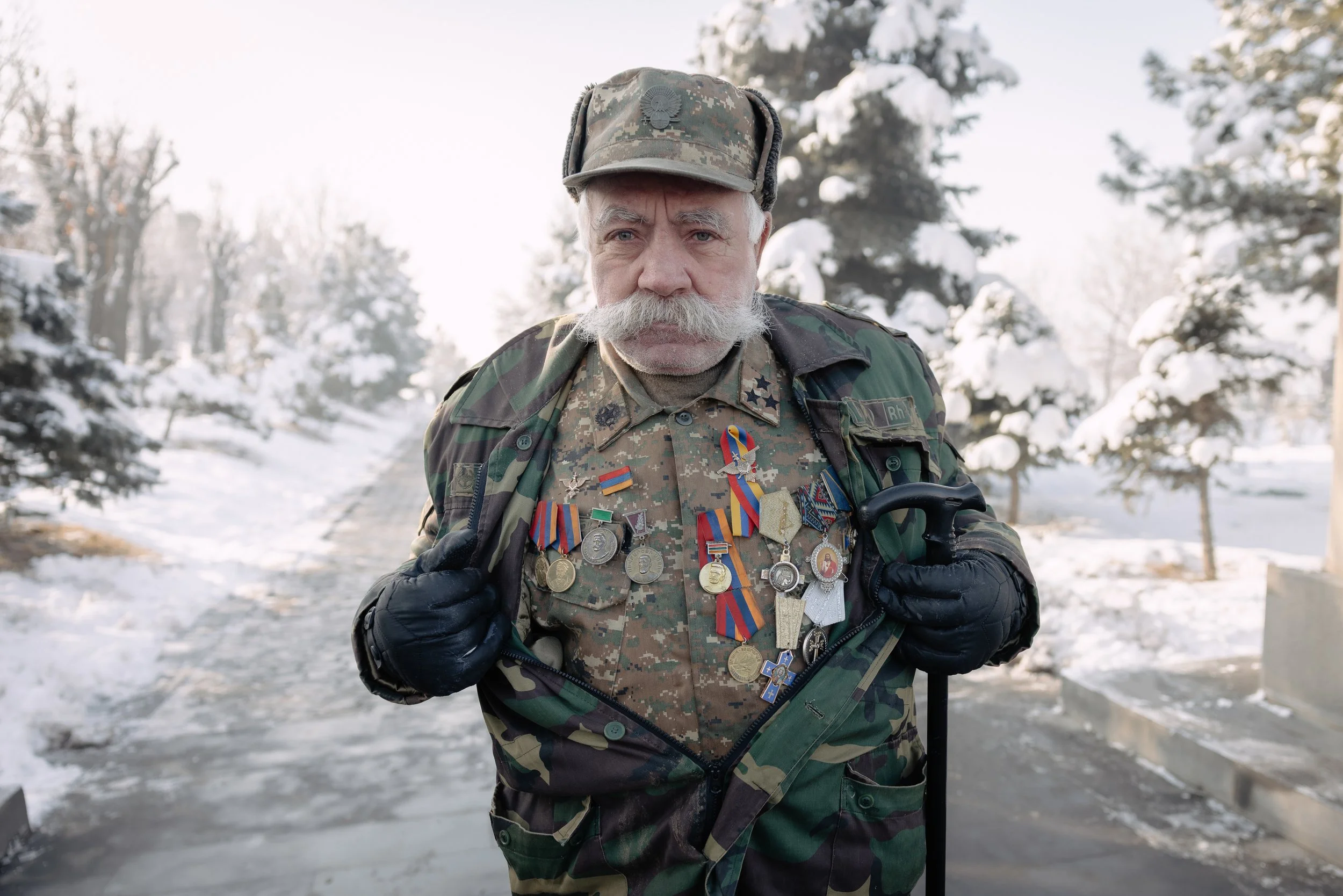
Ashot, a 75‑year‑old veteran originally from the historic Armenian region of Sasun (now in Turkey), shows the medals he earned in the First Nagorno‑Karabakh War during Army Day at Yerablur Cemetery in Yerevan on 28 January 2024. The medals tell a story of personal sacrifice where he was wounded in the leg during the conflict.
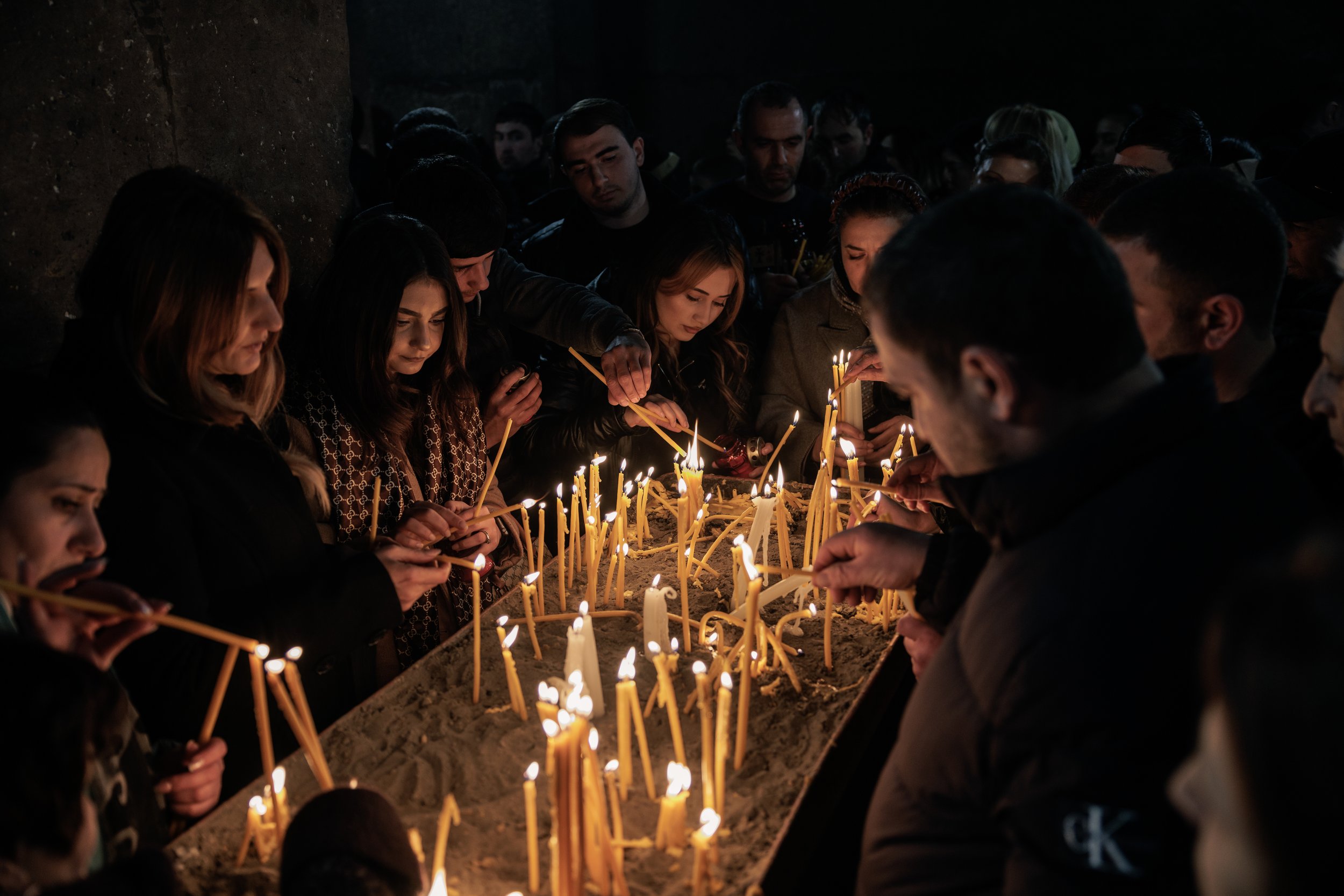
Armenians displaced from Nagorno-Karabakh light candles and pray inside Saint Gayane Church during the Christmas Eve Candlelight Divine Liturgy on 5 January 2024 in Etchmiadzin, Armenia,marking the first time the Diocese from Nagorno-Karabakh, also known as Artsakh, held the service in Armenia following the September 2023 mass displacement and the ongoing Armenia–Azerbaijan border delimitation talks.
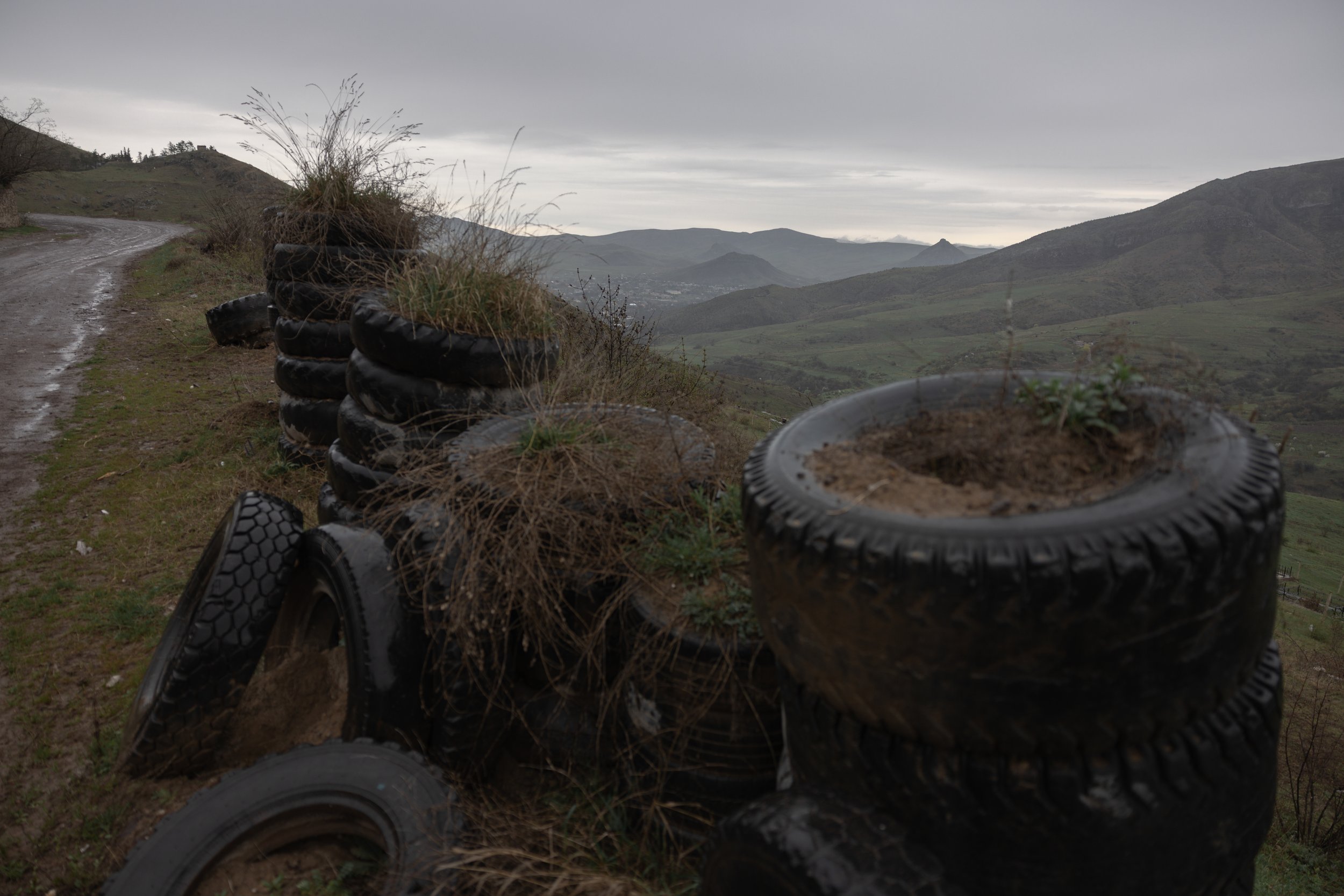
A makeshift wall of tires lines the road between Movses and Aygepar to provide cover for vehicles from gunfire from Azerbaijani positions toward Movses on 6 April 2024 amid heightened tensions during border delimitation talks following the 2023 Nagorno-Karabakh exodus. In the distance the village of Alibeyli, Azerbaijan is visible only a few kilometers away.
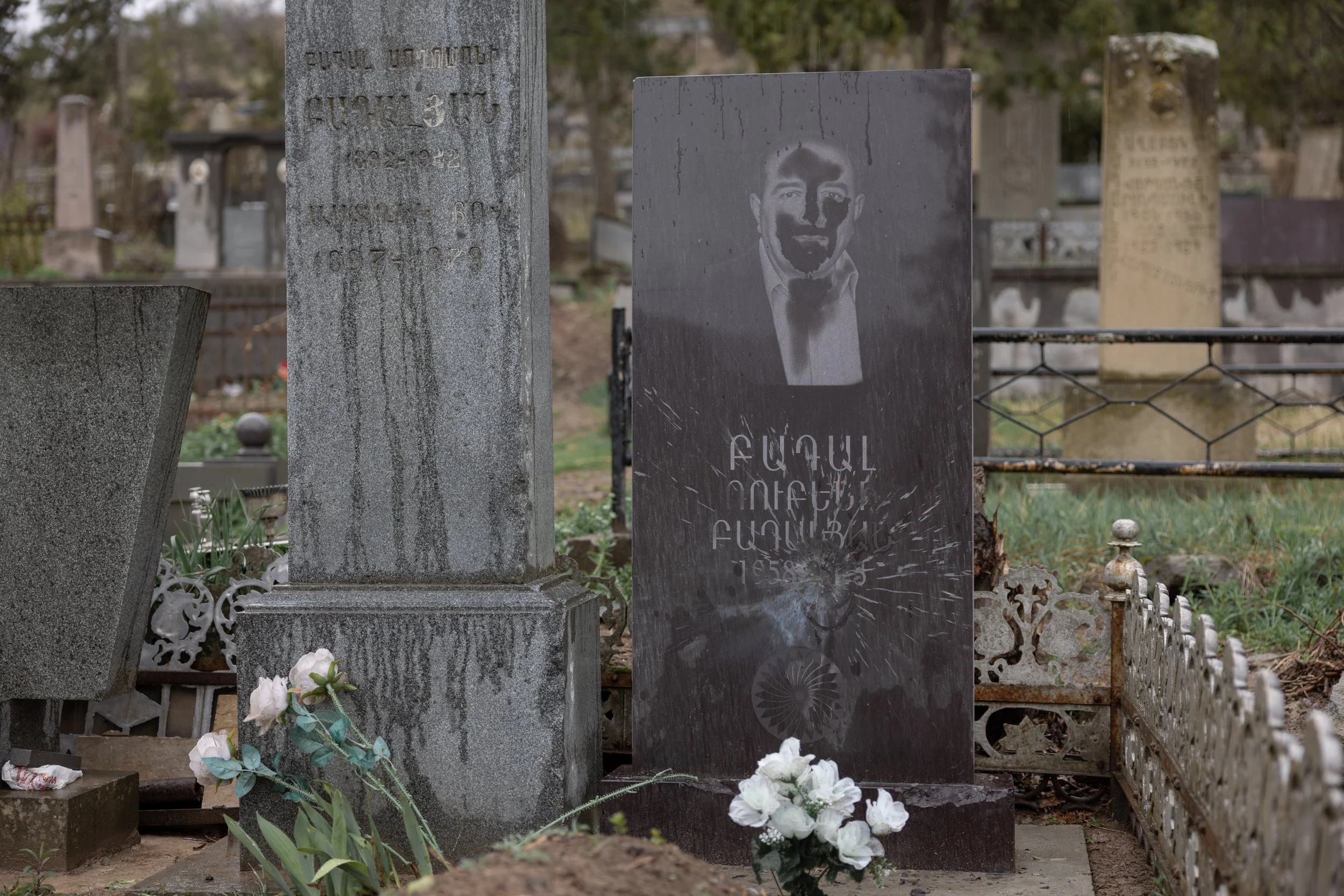
Damage is visible to one of several graves in the cemetery of Movses, Armenia on 6 April 2024 following overnight gunfire reported by local residents and authorities. According to locals, Azerbaijani military positions opened fire beginning late at night 5 April and continuing until approximately the early morning hours of 6 April, marking the first such incident affecting the village since July 2020.
The incident occurred as Armenia and Azerbaijan continued negotiations over border delimitation and demarcation in the Tavush–Gazakh border area, where Azerbaijan has called for the return of four villages under Armenian control since the 1990s. Damage from the gunfire was reported in the cemetery and in nearby civilian homes.
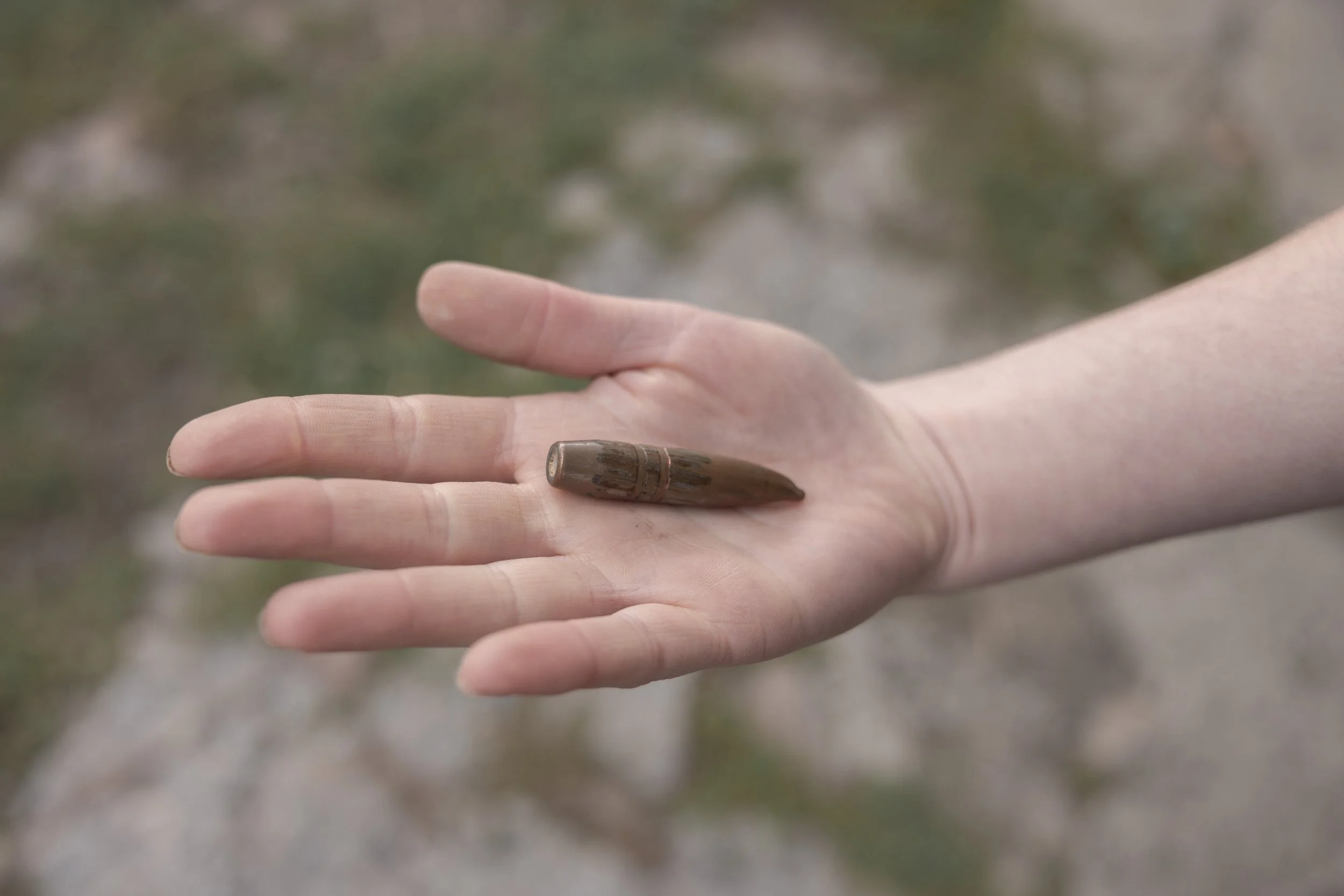
One of several Azerbaijani bullets collected from a home that was targeted in April 2023 in Kut village, Armenia in Gegharkunik Province on 16 September 2023 days before a major Azerbaijani military offensive on Nagorno-Karabakh that triggered the displacement of more than 100,000 ethnic Armenians to Armenia.
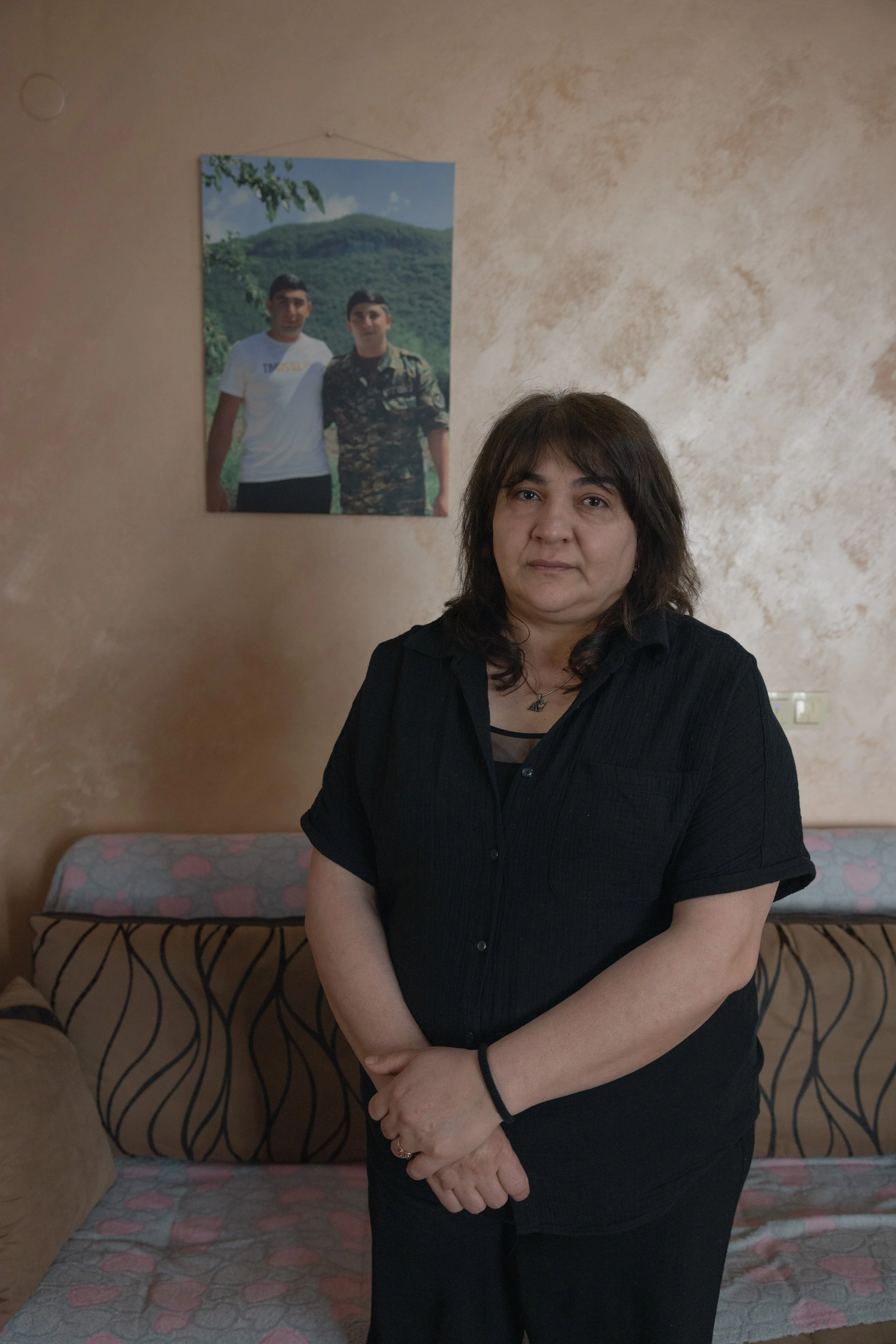
Irina Mirzoyan stands in front of a photograph of her sons inside her home in Yerevan, Armenia, on 26 March 2025. Her middle son, Arman, 18, was the first confirmed fatality in the Martakert region during Azerbaijan’s military offensive on Nagorno-Karabakh on 19 September 2023. He was killed while defending Armenian positions near the village of Magavuz.
During the escalation, Irina believed she had lost all three of her sons, as well as her husband, who were all deployed to the frontline. Communication lines were cut, phone calls went unanswered, and families across Armenia waited days for confirmation about the fate of their relatives. Arman’s death became one of the earliest symbols of the offensive, which lasted just over 24 hours and ultimately led to the collapse of Armenian control in Nagorno-Karabakh.
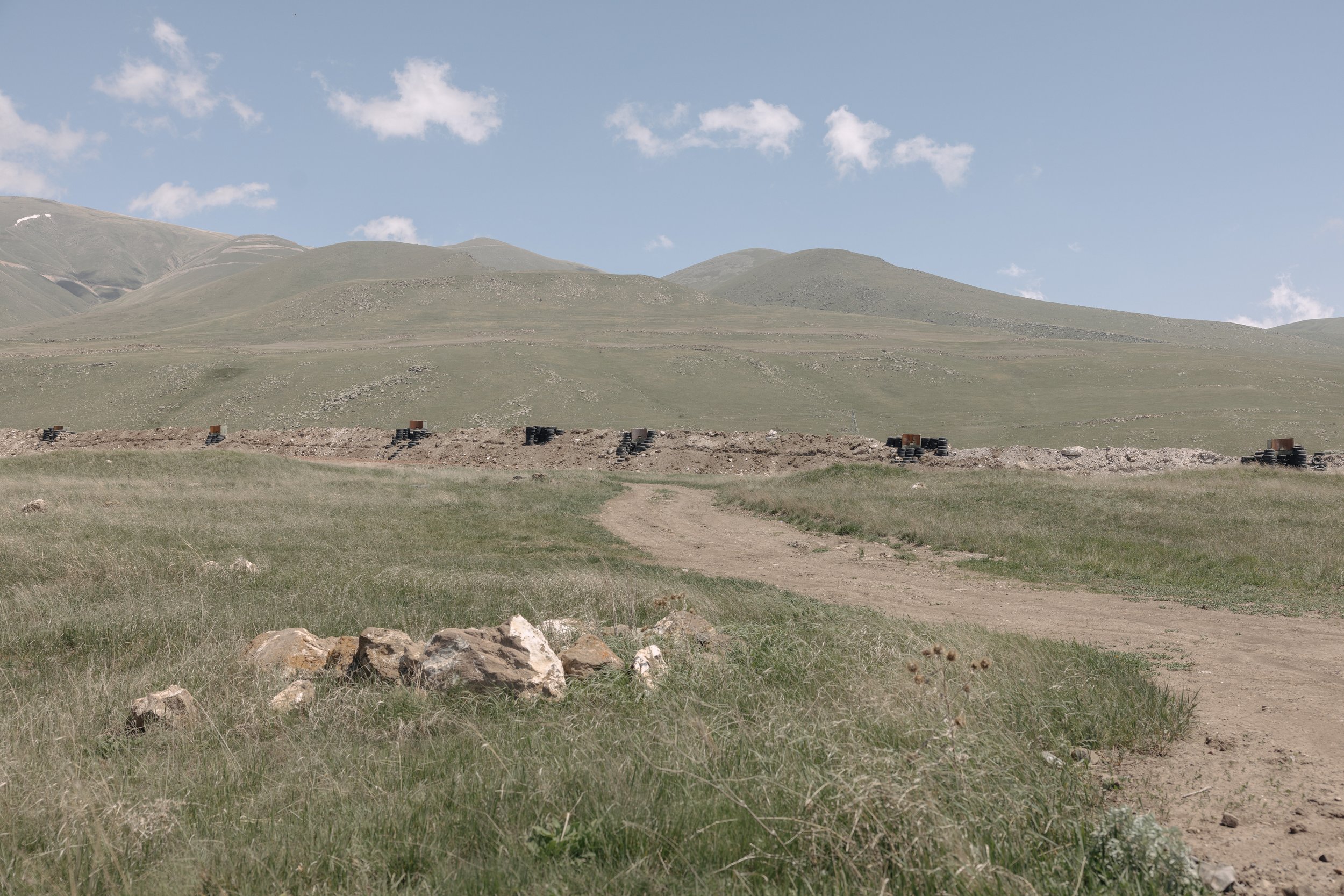
Military trenches cut through the earth just outside Yeraskh on 20 May 2025, a frontline village in Armenia’s Ararat Province, near the border with Azerbaijan’s Nakhchivan exclave. The area has seen repeated ceasefire violations and exchange of fire in recent years, making Yeraskh one of the most volatile points along the Armenia-Azerbaijan border. Located just 70 kilometers from the capital, Yerevan, Yeraskh holds strategic significance, especially amid ongoing tensions over regional transport routes and border demarcation.
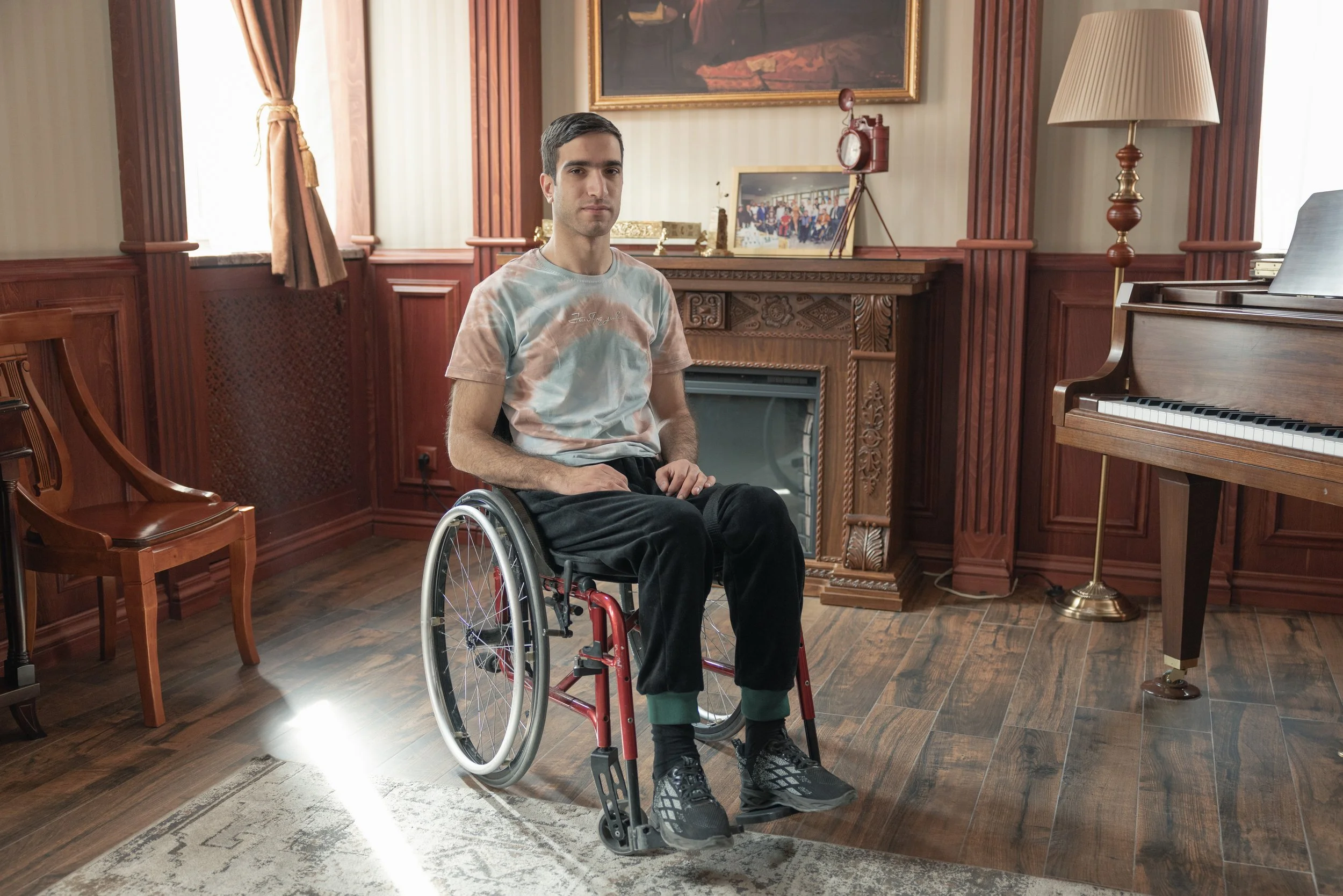
Portrait of a young wounded veteran, Hayk Zhamkochyan, at the Zinvori Tun Rehabilitation Center in Yerevan, Armenia on 1 March 2022 where he continues his recovery after being paralyzed by sniper fire during the 2020 Nagorno-Karabakh war. Zhamkochyan was among a large number of Armenian soldiers who were very young men, many just 18 or 19 years old when they were deployed during the 44-day conflict between Armenian and Azerbaijani forces in late 2020.
The 2020 Nagorno-Karabakh war resulted in significant casualties on both sides and left many servicemen and civilians wounded. For Armenian veterans like Zhamkochyan, rehabilitation has been a long process involving physical therapy, psychological support and reintegration efforts. The presence of so many young soldiers in intensive frontline roles, some of whom sustained life-altering injuries, has shaped public debate in Armenia about military service, support for wounded veterans and long-term care.
In October–December 2025, the National Assembly passed amendments that changed the length of compulsory military service nationwide. The standard mandatory service term was reduced from 24 months to 18 months, taking into effect 1 January 2026, and applies to new conscripts from the 2025 winter draft onward.
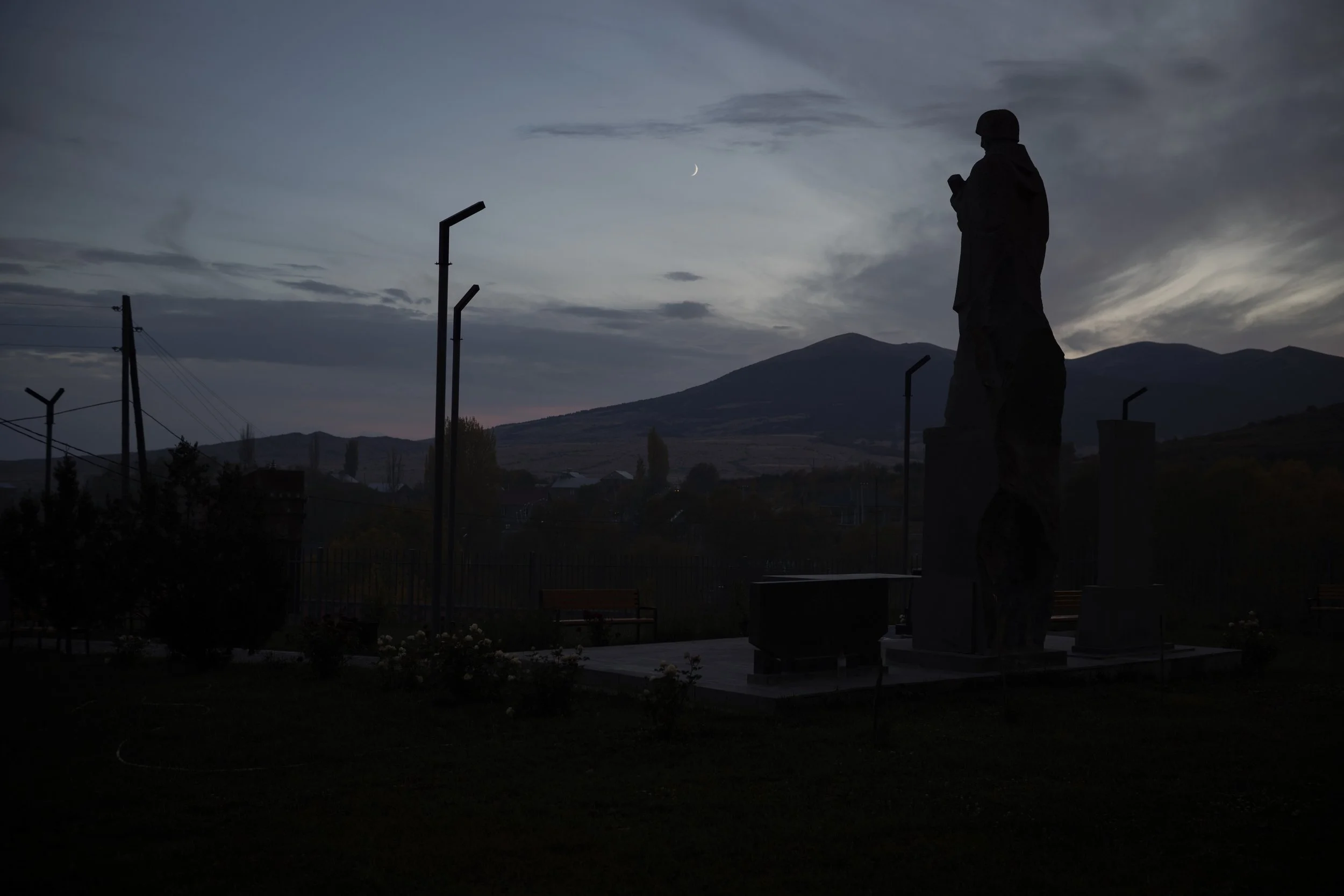
A memorial dedicated to Armenian soldiers who died fighting in the Second World War in the Soviet Union (1941–1945) stands outside Buzhakan village on 25 October 2025, reflecting the enduring tradition of honoring military sacrifice in Armenia amid ongoing regional tensions.
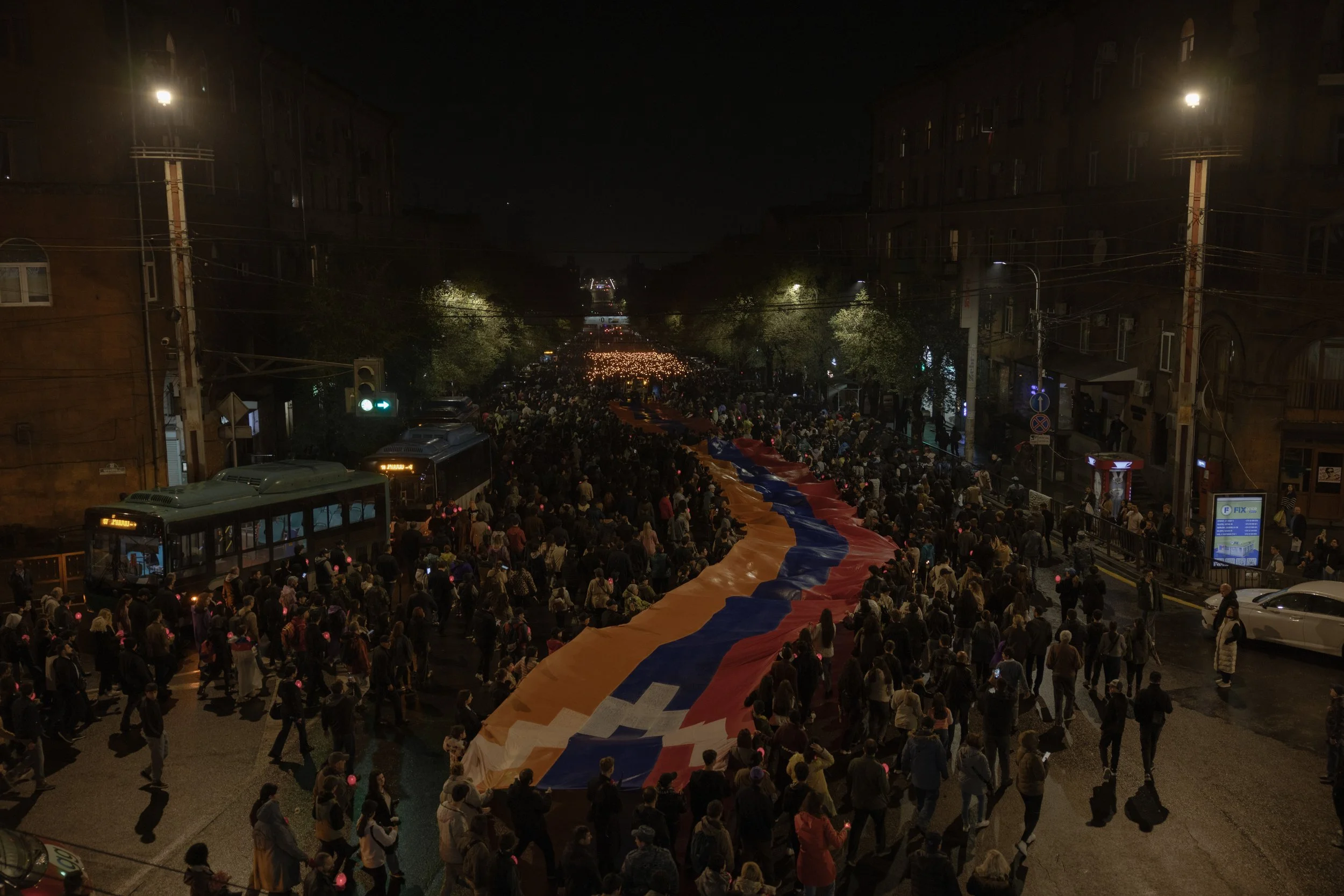
Thousands of Armenians march to the Tsitsernakaberd Genocide Memorial in Yerevan, Armenia carrying the flag of Nagorno‑Karabakh (Artsakh) during the annual torchlight procession on the eve of 110th Genocide Remembrance Day, held amid ongoing tensions along the Armenia–Azerbaijan border on 23 April 2025.
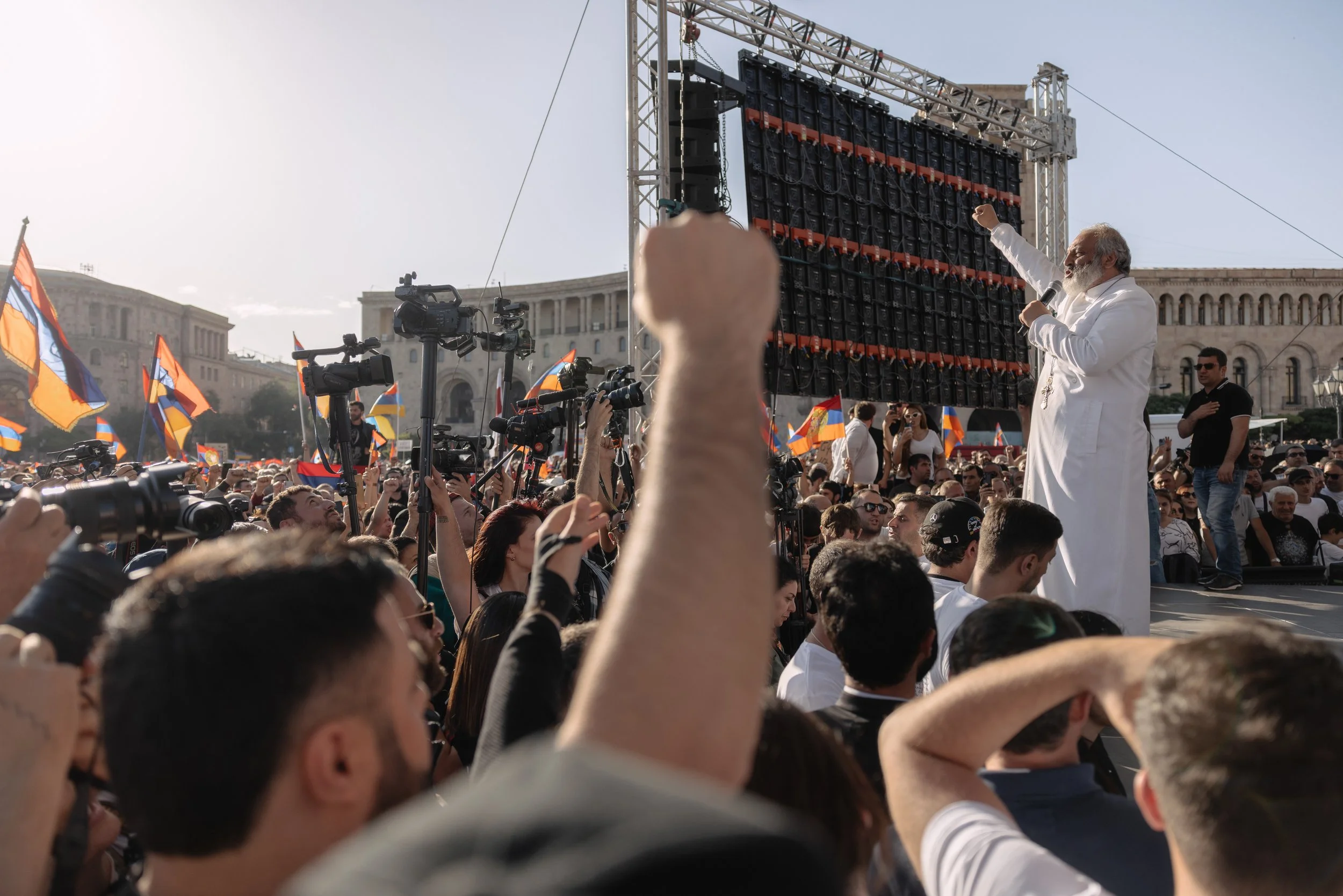
Archbishop Bagrat Galstanyan, Primate of the Tavush Diocese of the Armenian Apostolic Church, addresses protesters during a rally in Republic Square in the center of Yerevan, Armenia on 9 May 2024 as part of a movement initially known as “Tavush for the Homeland.” The protests began in May as a march from the Tavush border region to the capital, driven by public opposition to the Armenian government’s border delimitation and demarcation process with Azerbaijan, including the planned transfer of four villages near Tavush that had remained under Armenian control since the First Nagorno-Karabakh War.
By mid-May, the movement had grown into large demonstrations in Yerevan, with thousands gathering near the Opera and Ballet Theatre and later Republic Square. Protesters demanded not only a halt to the border process but also the resignation of Prime Minister Nikol Pashinyan, reflecting broader concerns over security, governance, and territorial concessions. Galstanyan emerged as the public face of the movement, framing it as a struggle for national survival.
The participation of a senior cleric in political protest generated controversy in Armenia, where the constitution establishes a separation between church and state. While critics questioned the church’s role in secular politics, supporters viewed Galstanyan as a patriotic figure articulating public discontent.
The “Tavush for the Homeland” protests marked a turning point in Armenia’s post-2020 political landscape, transforming localized opposition to border changes into a nationwide anti-government movement. What began as resistance to planned territorial handovers near the Armenia–Azerbaijan border in Tavush evolved into broader civil disobedience actions in Yerevan, including marches, rallies, and road blockages.
In 2025, Armenian authorities escalated their response to the movement and in late June Archbishop Bagrat Galstanyan was detained and formally charged with preparing terrorism, organizing mass unrest, and attempting to seize state power in connection with his role in what officials later referred to as the “Sacred Struggle” movement. The charges were denied by Galstanyan and his legal team, who described them as politically motivated. A Yerevan court ordered his pre-trial detention, which has since been extended.
On 16 May 2025, Armenian and Azerbaijani flags stood just metres apart on the edge of Khnatsakh village in Syunik Province, Armenia, less than 3 months before the peace deal was reached between the two countries in Washington D.C. Military forces from both sides hold positions so close that soldiers can hear one another speak, where the Armenian side often plays music to drone out the voices from the other side. Locals report nightly gunfire in the area and it was one of the most contested areas in the province of Syunik. According to residents and Armenian officials, the proximity of forces and repeated reports of gunfire suggested that Azerbaijani troops were either failing to control their units or were deliberately using intimidation tactics against civilians.
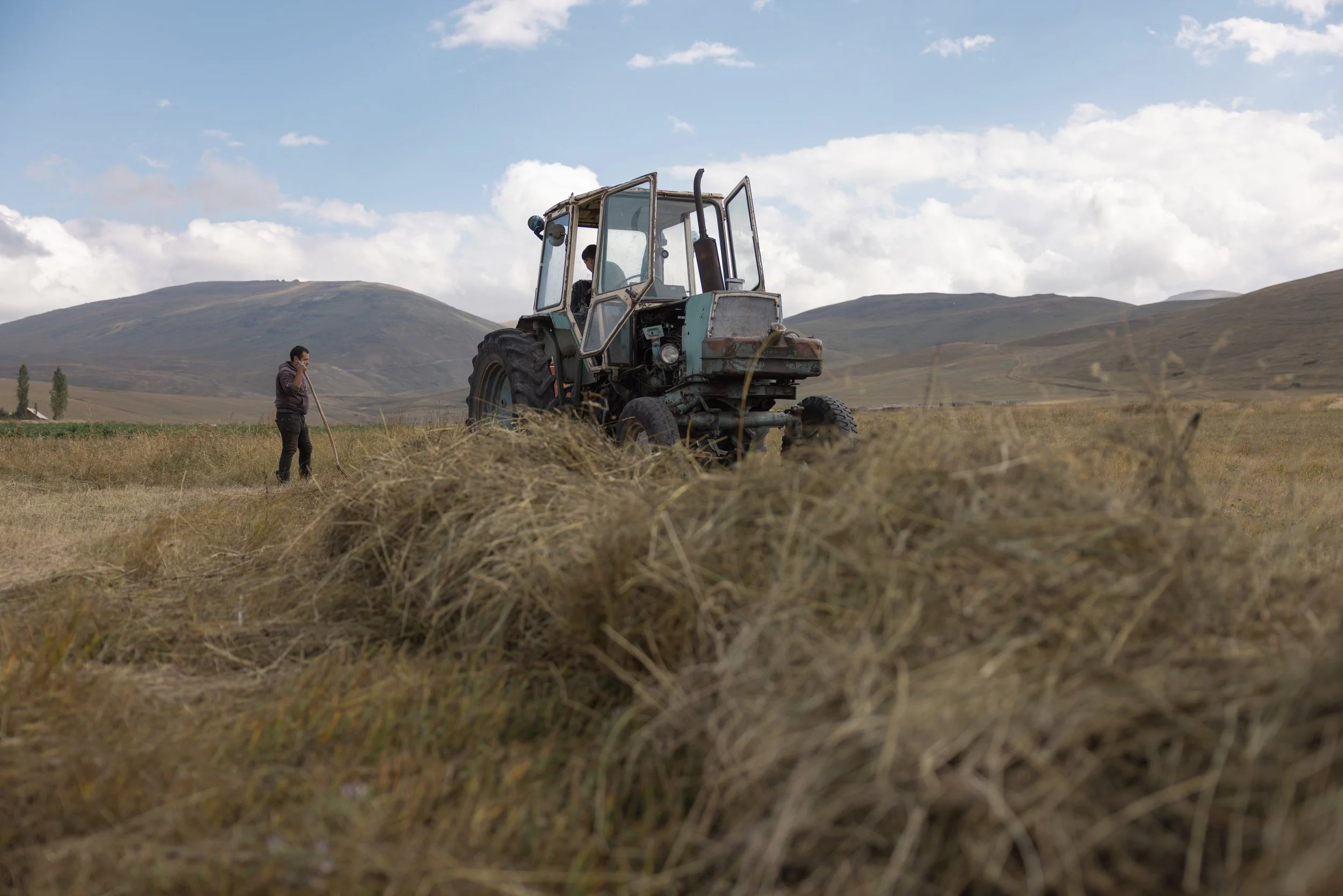
Residents of Kut village in Armenia's Geghakunik region carry out agricultural work in fields near the Armenia–Azerbaijan border on 16 September 2023 with Azerbaijani military positions in the distance, a village that had been prone to regular border shootings following the 2020 war.
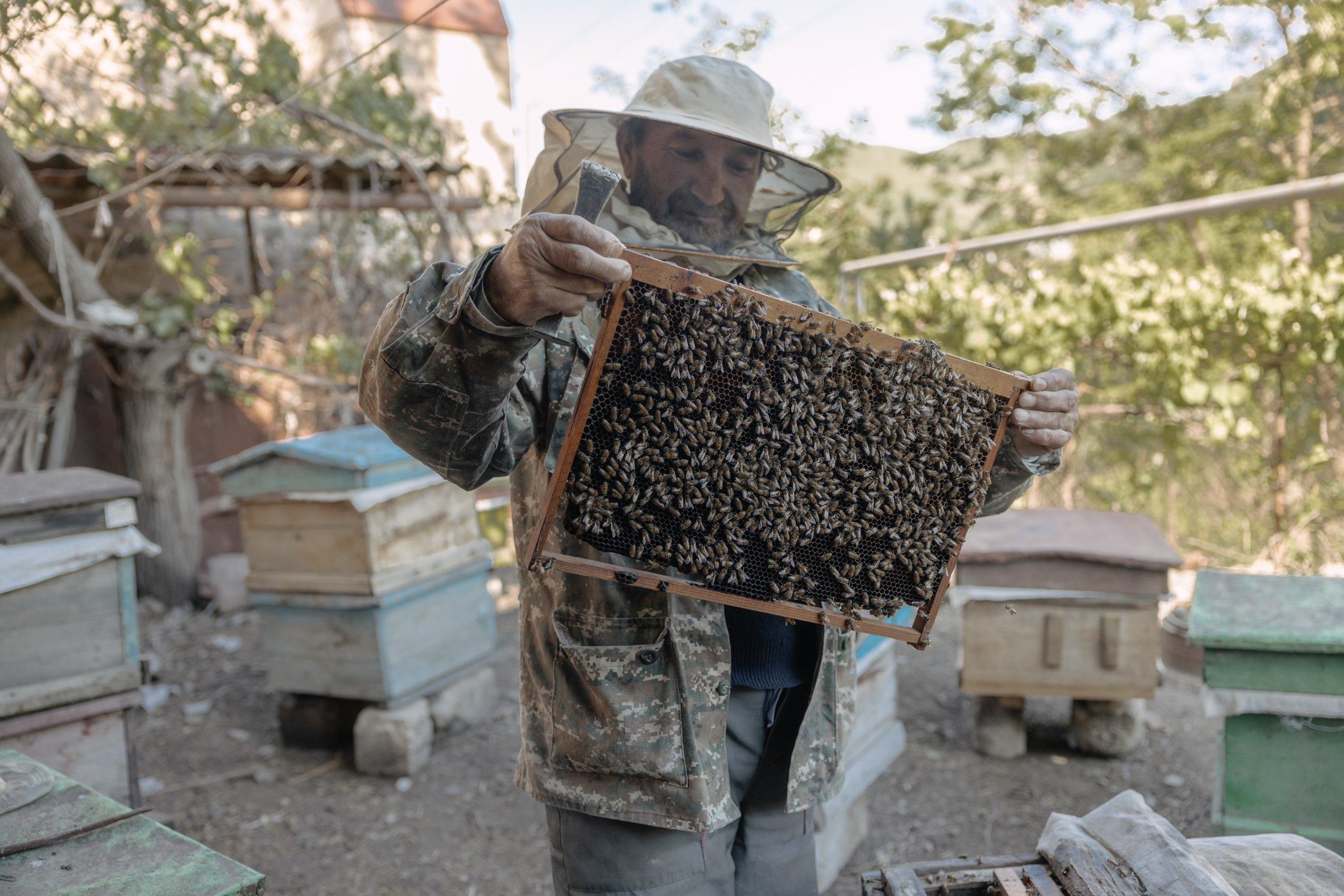
Liparit Martirosyan, 65, tends to his beehives next to his home in the border village of Khnatsakh, Syunik Province, Armenia, on 16 May 2025. Beekeeping provides honey for household use and limited income and has long been part of the region’s rural economy, where wild mountain flora produces prized local honey.
Khnatsakh lies close to Azerbaijani military positions, and residents report regular nighttime gunfire across the border during this period, months before a peace agreement was reached between Armenia and Azerbaijan in Washington in August 2025. The security situation has made daily activities increasingly risky, including farming and tending livestock.
Martirosyan, a former physics teacher at the village secondary school, says life during the Soviet era felt stable by comparison. Today, he gathers wild herbs from nearby fields to preserve for winter, despite the presence of minefields left from past fighting. He says one of his horses was killed after triggering a landmine. The village also faces shortages of drinking water, forcing residents to collect water from a nearby spring and carry it home in plastic containers. Despite the insecurity and hardship, Martirosyan says he intends to remain in Khnatsakh, like many residents determined to stay on their land.
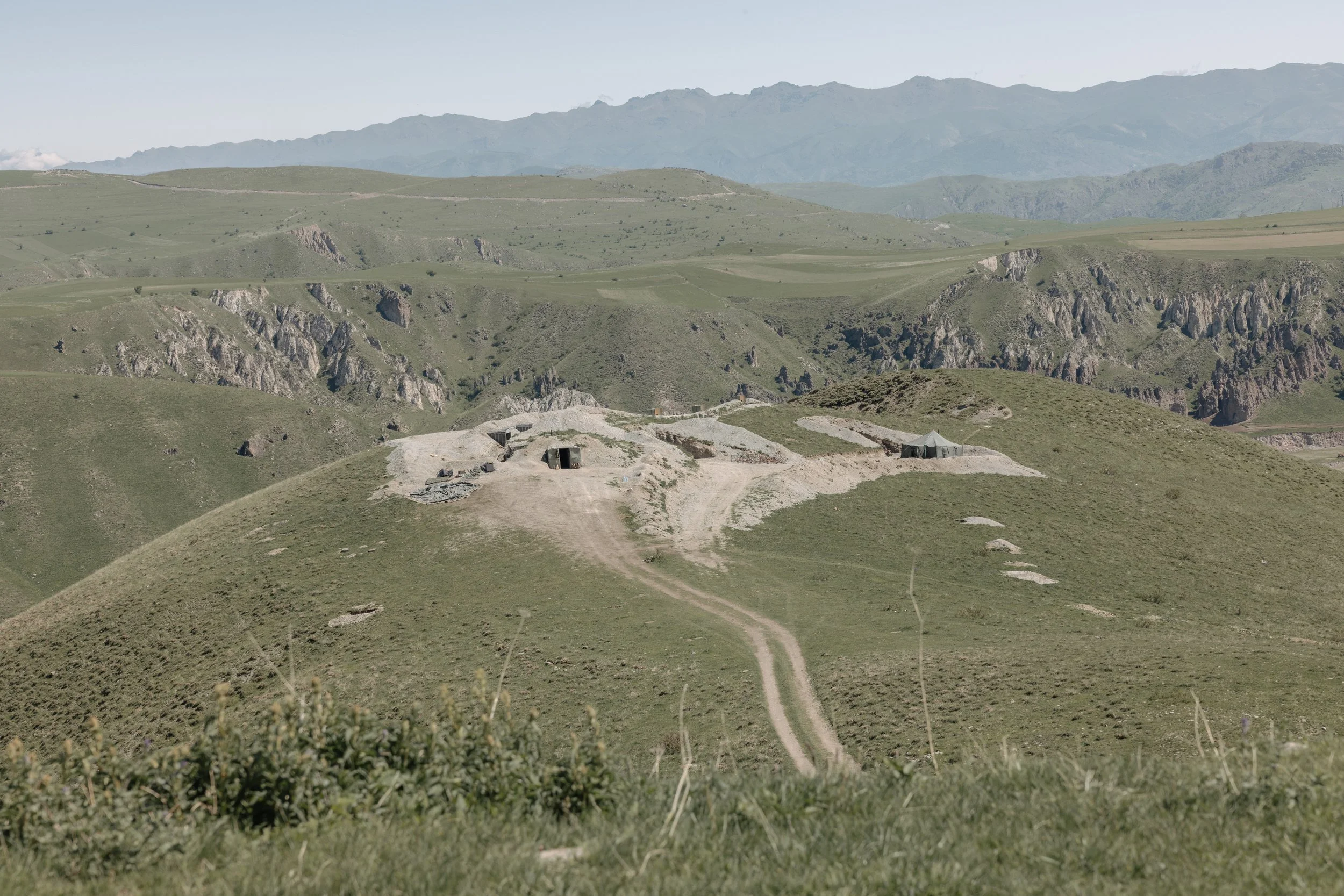
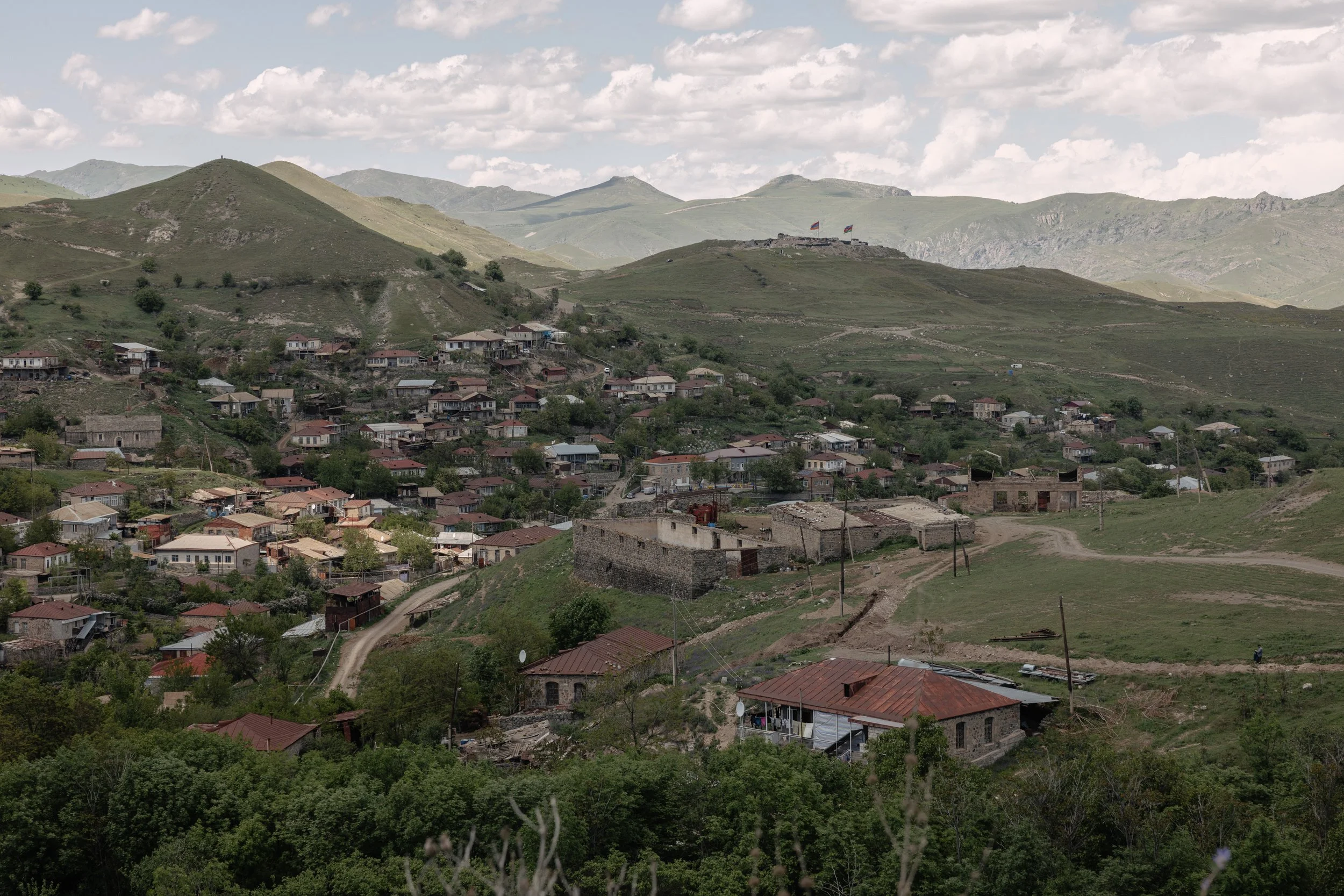
A military position overlooks Khoznavar, a small agriculture village in Armenia’s Syunik Province, on 17 May 2025. Surrounded on three sides by Azerbaijani military posts, the village has become increasingly vulnerable to cross-border fire. On 20 April 2025, Azerbaijani forces opened fire on Khoznavar, damaging a solar water heater on a residential building. While no casualties were reported, residents hear shots almost every night.
Home to around 350 people, Khoznavar is connected to the rest of Armenia by a single road, known locally as “the path to life.” Armenian authorities are upgrading the route to ensure faster movement for both military and civilian vehicles. The precarious geography, frequent cross-border incidents, and isolation of this frontier community highlight the fragile security and daily risks faced by its inhabitants prior to the August peace agreement reached between Armenia and Azerbaijan in Washington D.C.
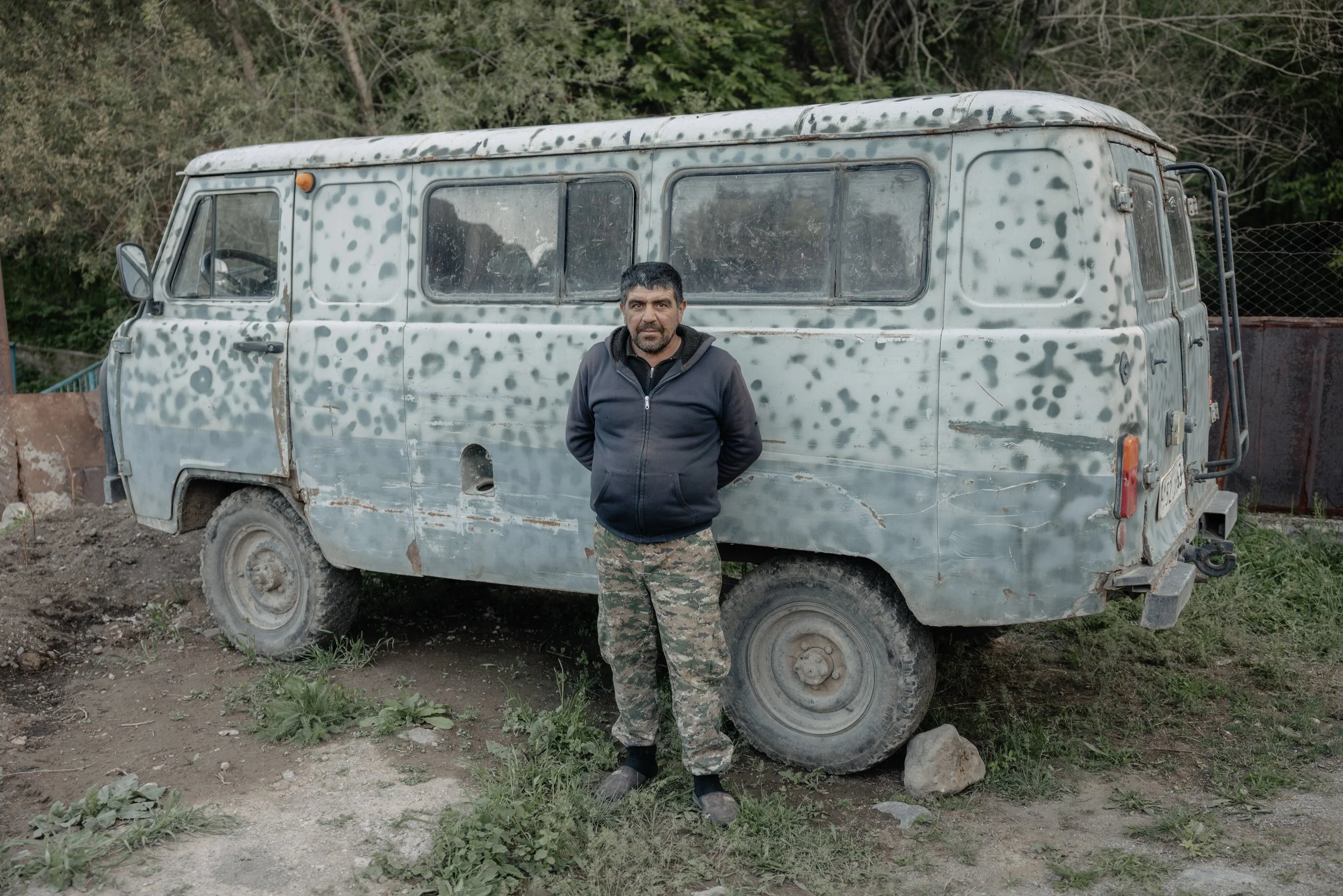
David Babayan, a father of seven, worked during the 2020 Nagorno-Karabakh war retrieving the bodies of fallen soldiers from battlefields in his UAZ‑452 van. He recalls the horrors of corpses lying in the fields for weeks, often torn apart by artillery fire, and the trauma of handling remains for identification. The conflict, which lasted 44 days, left deep scars across Nagorno-Karabakh and surrounding Armenian border regions, displacing thousands and leaving villages exposed to sudden violence.
Today, David works long hours as a construction laborer on a new school at the edge of Khnatsakh village, Syunik Province, on 17 May 2025. He raises four of his children, while the youngest attends kindergarten, and older children have married. His labor reflects a determination to rebuild and restore normalcy in a community that remains on edge. Despite a formal ceasefire and ongoing peace negotiations, uncertainty looms where both Armenia and Azerbaijan continue to fortify their border positions, and residents live under the constant threat of cross-border fire.
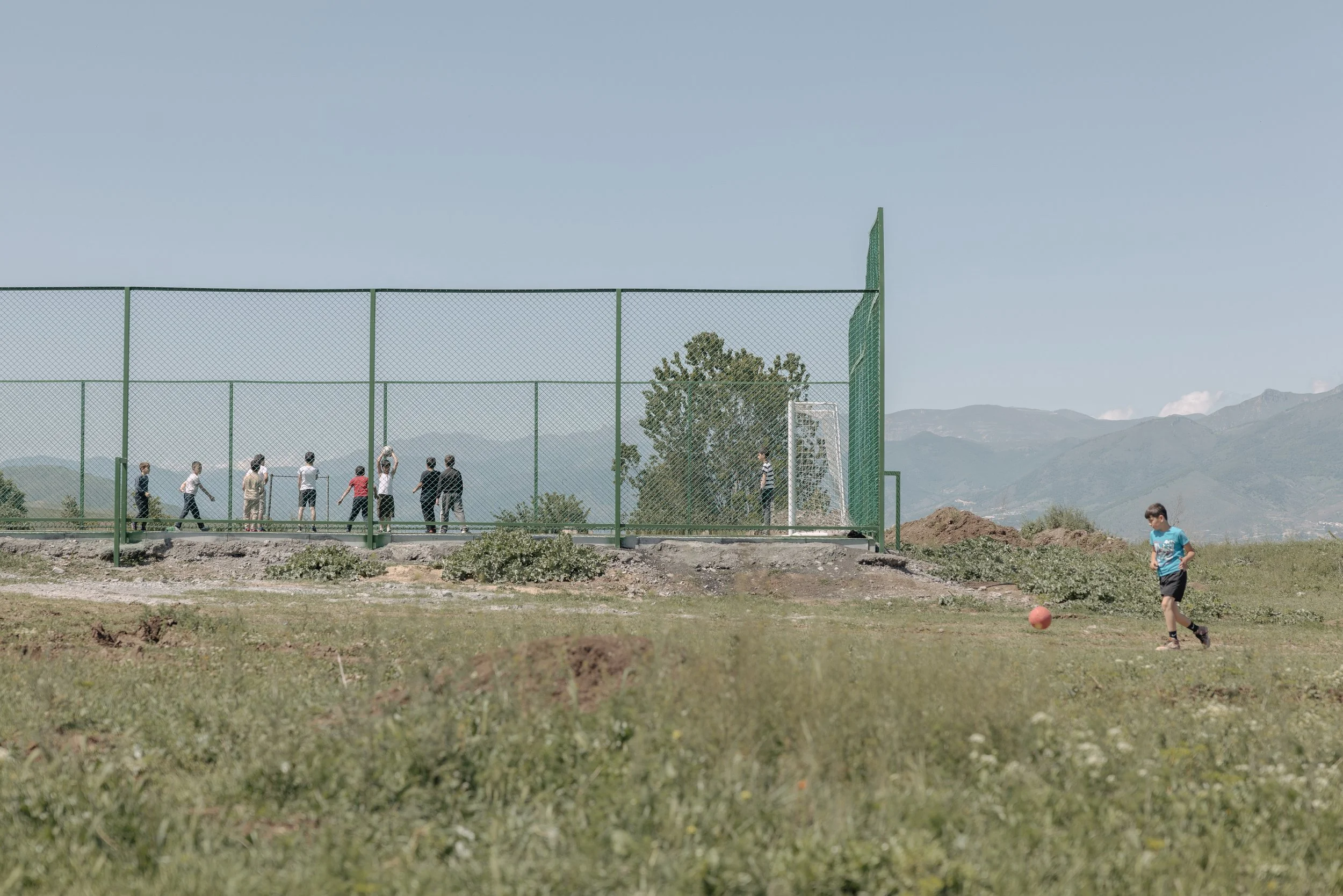
Children play in a humble roadside park in Kornidzor, Armenia, a village near the heavily militarized and strategically significant Lachin Corridor on 17 May 2025. The Corridor once served as the main link between Armenia and Nagorno-Karabakh. In September 2023, a rapid military offensive by Azerbaijan forced a mass exodus of ethnic Armenians from Nagorno‑Karabakh. Over 100,000 people crossed into Armenia in a matter of days, many arriving through Kornidzor and its adjacent mountain routes.
Today, while the laughter of children fills the playground, that very proximity to a route once marked by fear, displacement and uncertainty underscores the fragile calm that defines daily life in this quiet borderland community. The park is full of heavy memories of loss, uprooted lives, and the displacement of entire communities.
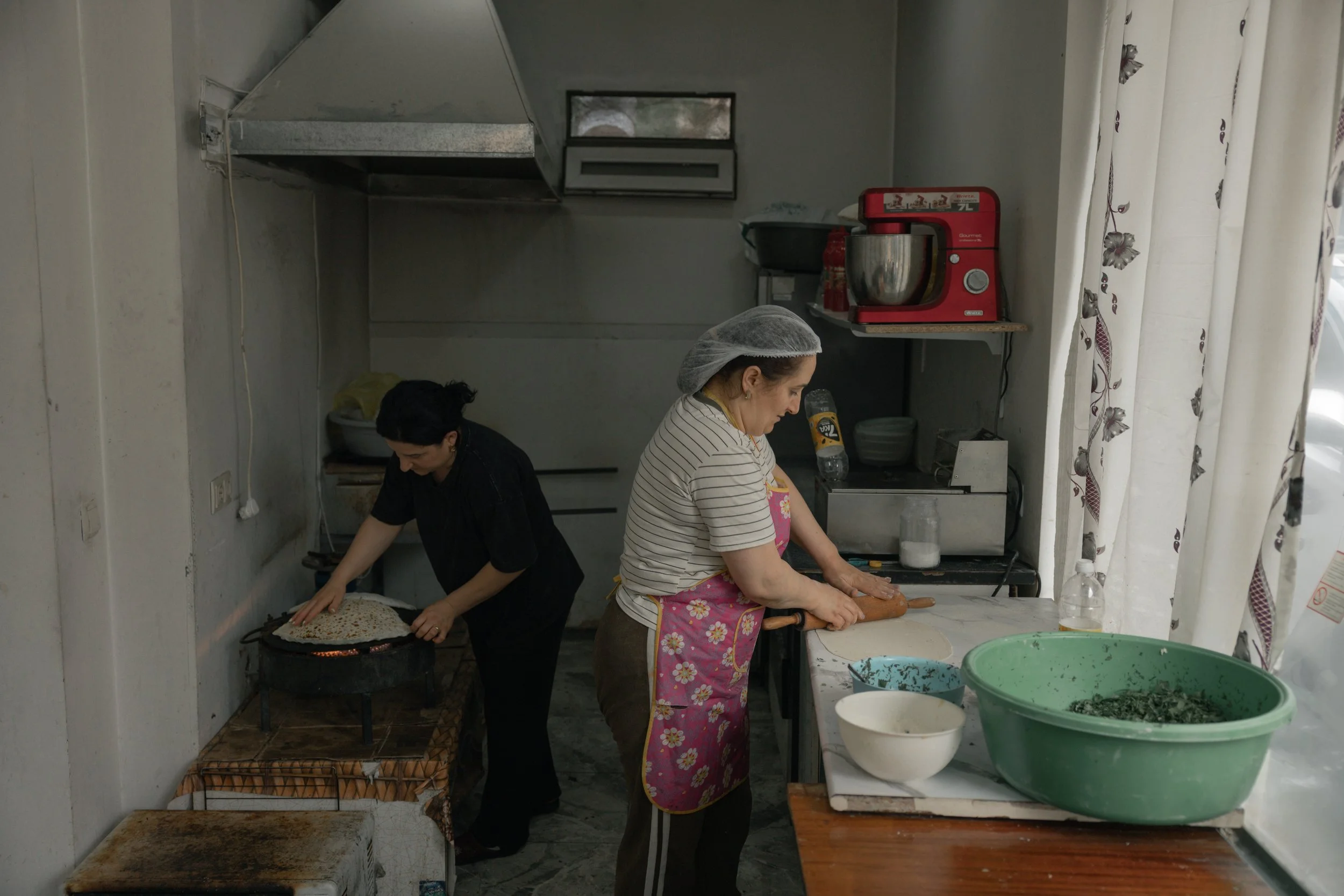
Mrs. Anna (right) and Gohar (left), originally from the Nagorno-Karabakh villages of Khndziristan and Drmbo, work in a small bakery in Kapan, Armenia, preparing zhingyalov hats and pakhlava, traditional Armenian pastries, on 19 May 2025. Forced to flee their homes after Azerbaijan’s 2023 military offensive, which emptied the region of its Armenian population, they resettled in southern Armenia near the border. Through their bakery, which employs local residents, they preserve cultural traditions while rebuilding their lives and livelihoods.
Nearly 100,000 ethnic Armenians were displaced in one of Armenia’s largest displacements in decades. Many are registered with the government, children attend schools, and thousands have received Armenian citizenship, yet challenges remain. Housing is limited, with many in temporary or state-provided accommodations, and employment opportunities are scarce outside Yerevan.
Legal recognition delays affect access to social services, while trauma, interrupted education, and language barriers complicate integration. Most families have settled in Yerevan or surrounding provinces such as Kotayk, Ararat, and Armavir to stay away from the border, while others have emigrated abroad. The displacement represents a humanitarian crisis and profound social transformation, as families rebuild lives far from ancestral homes, navigating uncertainty and identity in the wake of conflict.
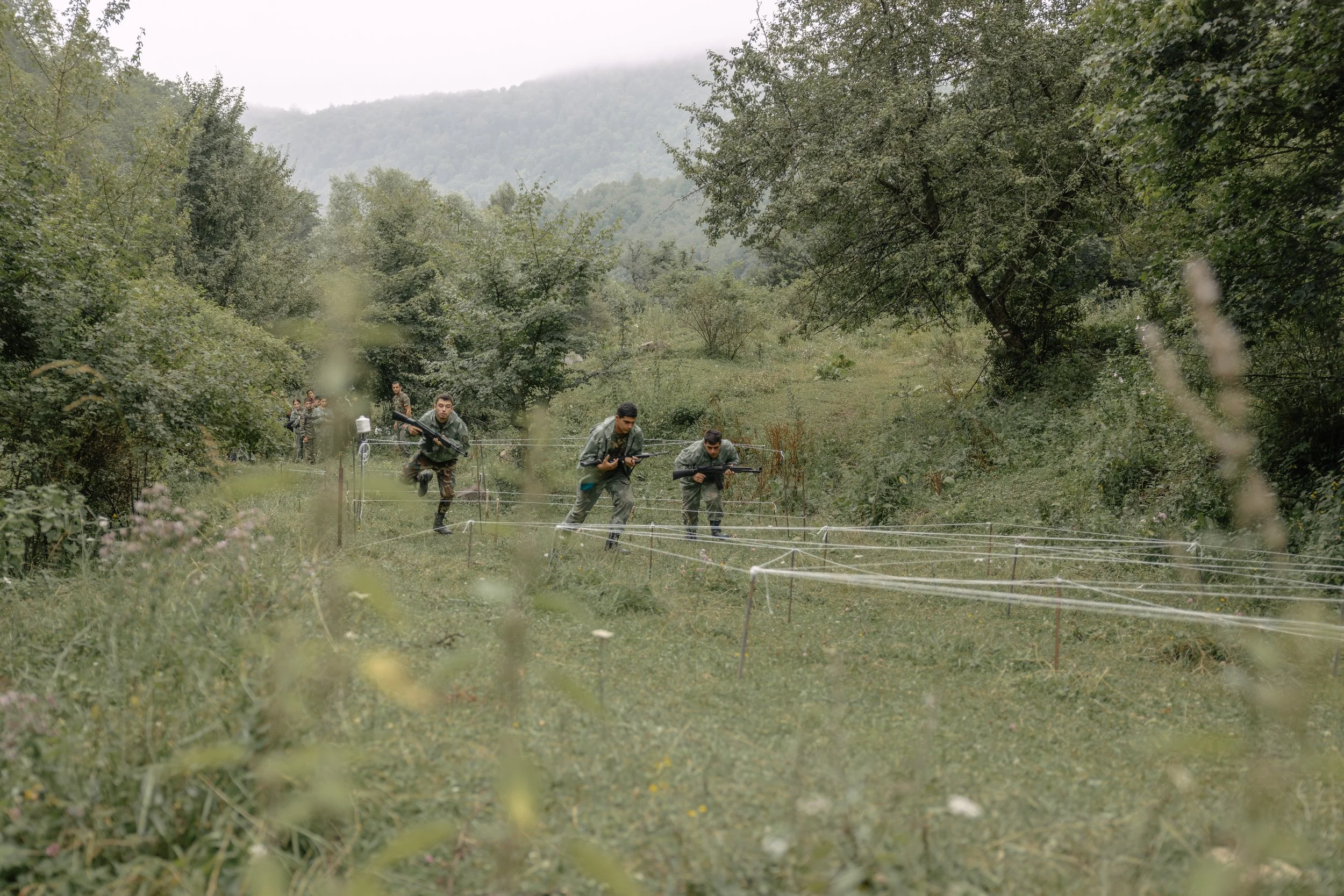
Armenian civilians take part in military defense training in Dilijan, Armenia Tavush Region on 30 July 2023 as part of broader efforts to increase public preparedness amid continuing tensions along the Armenia–Azerbaijan border. These training activities took place against a backdrop of repeated ceasefire violations and cross-border incidents throughout 2023, including small arms fire directed at Armenian positions in nearby provinces.
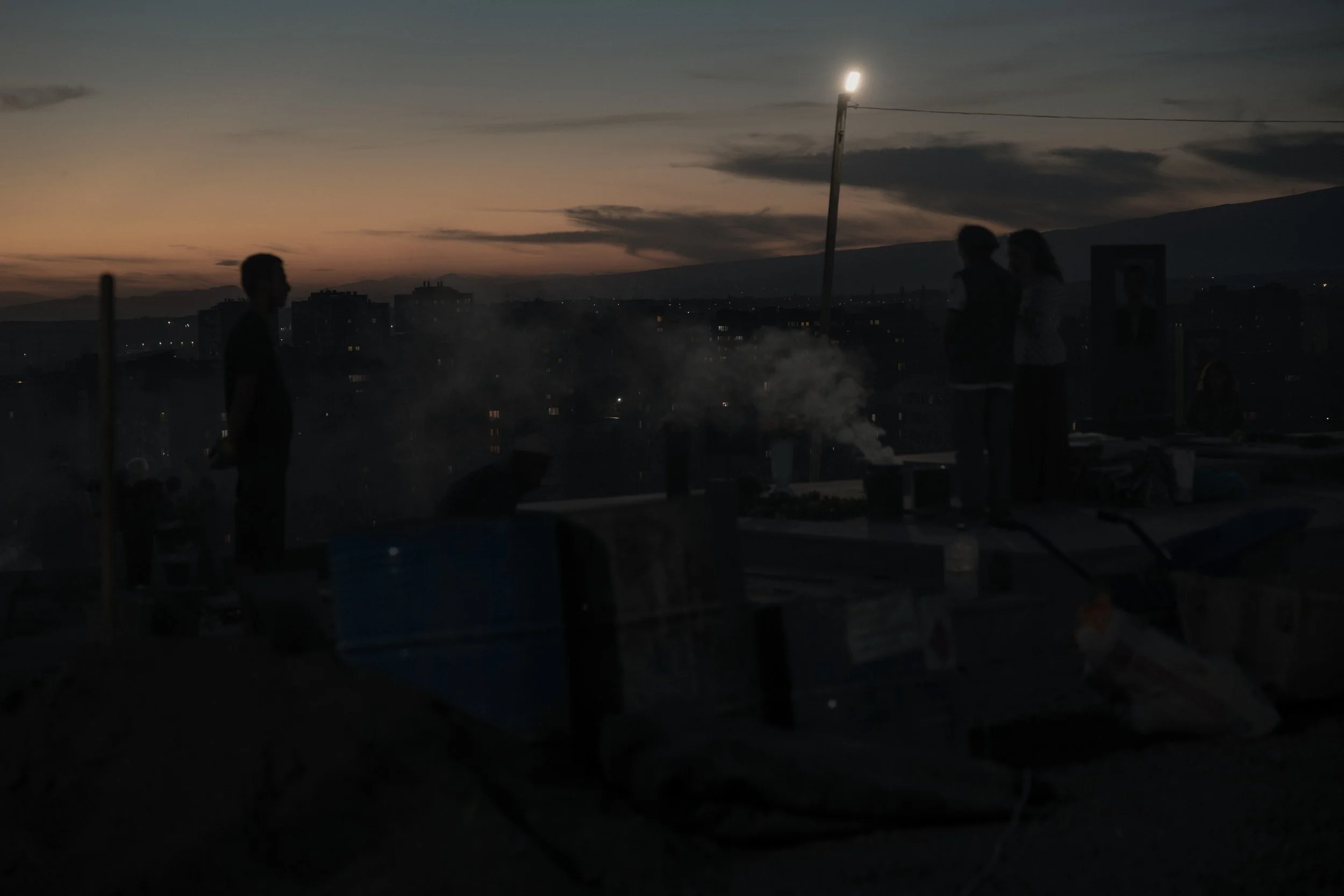
Armenians visit the Yerablur Military Pantheon on the outskirts of Yerevan, Armenia on 26 September 2022 to pay respects at the graves of soldiers killed during the Nagorno-Karabakh wars and in recent clashes with Azerbaijani forces. The Yerablur Military Pantheon in Yerevan is a burial ground for Armenian servicemen who died in conflicts related to Nagorno-Karabakh, including the First Nagorno-Karabakh War in the early 1990s, the Second Nagorno-Karabakh War in 2020, and subsequent border and enclave clashes. Visits to Yerablur around anniversary dates are common in Armenian society as a way of honoring the dead and reaffirming collective memory.
In September 2022, renewed hostilities between Armenian and Azerbaijani forces broke out near strategic locations along the border and within contested areas, resulting in casualties and prompting temporary escalations.