Echos of Conflict
For decades, the conventional wisdom in Yerevan was that relinquishing Nagorno-Karabakh might finally buy Armenia a lasting peace. But as we move through early 2026, that hope has curdled into a harsh reality for the people of Syunik Province. Since the 2023 handover, the frontline hasn't vanished; it has simply moved to their doorsteps, with Azerbaijani positions now sitting just meters from civilian homes. Residents who survived the 44-day war in 2020 and the 2022 territorial losses now describe Syunik as a "second Nagorno-Karabakh." It’s a bitter label for a region that sits at a geopolitical crossroads between Azerbaijan, Iran, and the Nakhchivan exclave—a piece of land that politicians view as a strategic "corridor" but locals experience as a literal graveyard for their peace of mind.
The "peace" touted in diplomatic circles felt particularly hollow throughout 2025. In April, the world saw photos of homes in Khnatsakh riddled with bullet holes, and by June, Azerbaijani forces were firing on houses in Nerkin Hndzan and disrupting road crews. Even though international monitors have lately managed to quiet the guns, the damage is already done: farmers are too terrified to plow their fields and children stay inside once the sun goes down. It’s a haunting existence where the "human cost" isn't just a statistic about the thousands displaced or killed since 2020; it’s the daily, grinding fear of a father wondering if a sniper is watching him fix his roof.
Despite a formal peace deal reached in Washington D.C. back in August 2025, the tension over the so-called "Zangezur corridor" keeps the region on a knife's edge. While Baku and international investors talk about opening transit routes and "gateways to development," the families in these border villages see only strategic leverage being applied at the end of a barrel. The bullets may have slowed for the moment, but for the people of Syunik, the stability promised years ago feels further away than ever. They aren't looking at maps or trade data; they’re looking at the hills above their homes, waiting to see if the next "diplomatic breakthrough" comes with more gunfire.
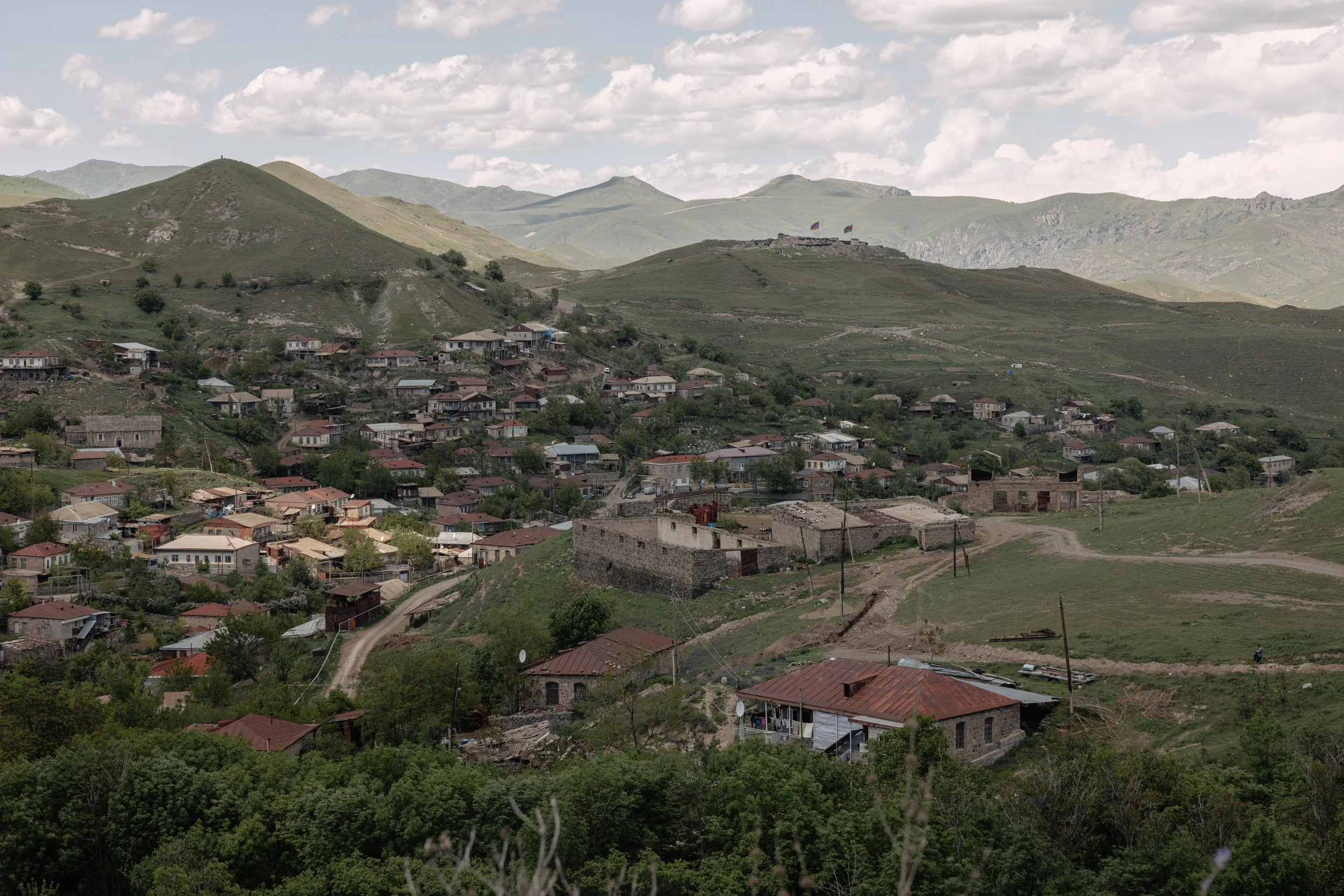
On 16 May 2025, Armenian and Azerbaijani flags stood just metres apart on the edge of Khnatsakh village in Syunik Province, Armenia, less than 3 months before the peace deal was reached between the two countries in Washington D.C. Military forces from both sides hold positions so close that soldiers can hear one another speak, where the Armenian side often plays music to drone out the voices from the other side. Locals report nightly gunfire in the area and it was one of the most contested areas in the province of Syunik. According to residents and Armenian officials, the proximity of forces and repeated reports of gunfire suggested that Azerbaijani troops were either failing to control their units or were deliberately using intimidation tactics against civilians. The photograph documents this tense, precarious state at the borderlands, illustrating how front‑line militarisation affects nearby communities and the state of their daily lives, underlining the human cost of an armed stand‑off.
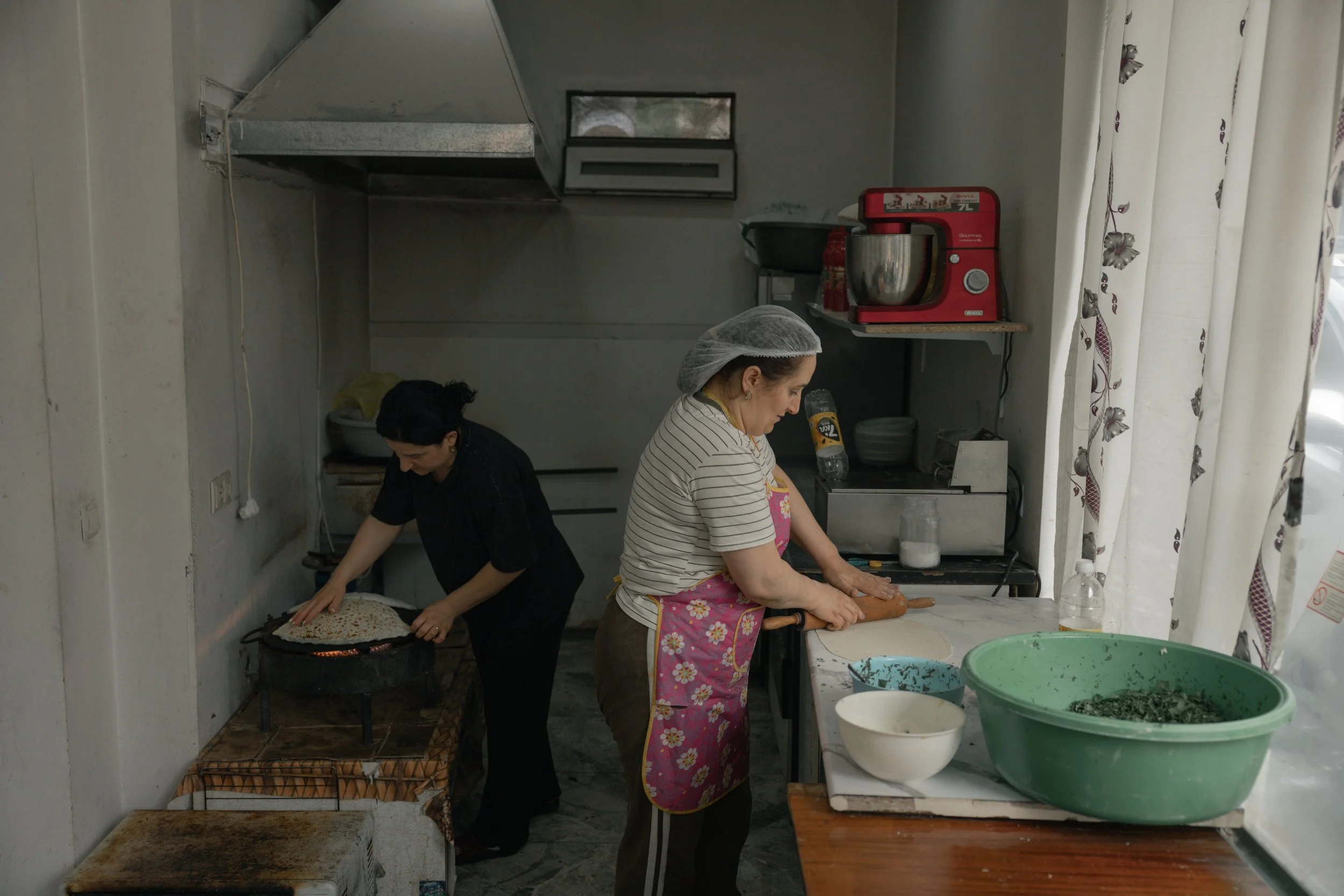
Displaced women from Nagorno-Karabakh prepare zhingyalov hats, a traditional herb-stuffed flatbread, in a small bakery Kapan, Syunik Province, Armenia on May 19, 2025. Fleeing Azerbaijan’s 2023 military offensive, they now live in southern Armenia, preserving cultural traditions while building new livelihoods.
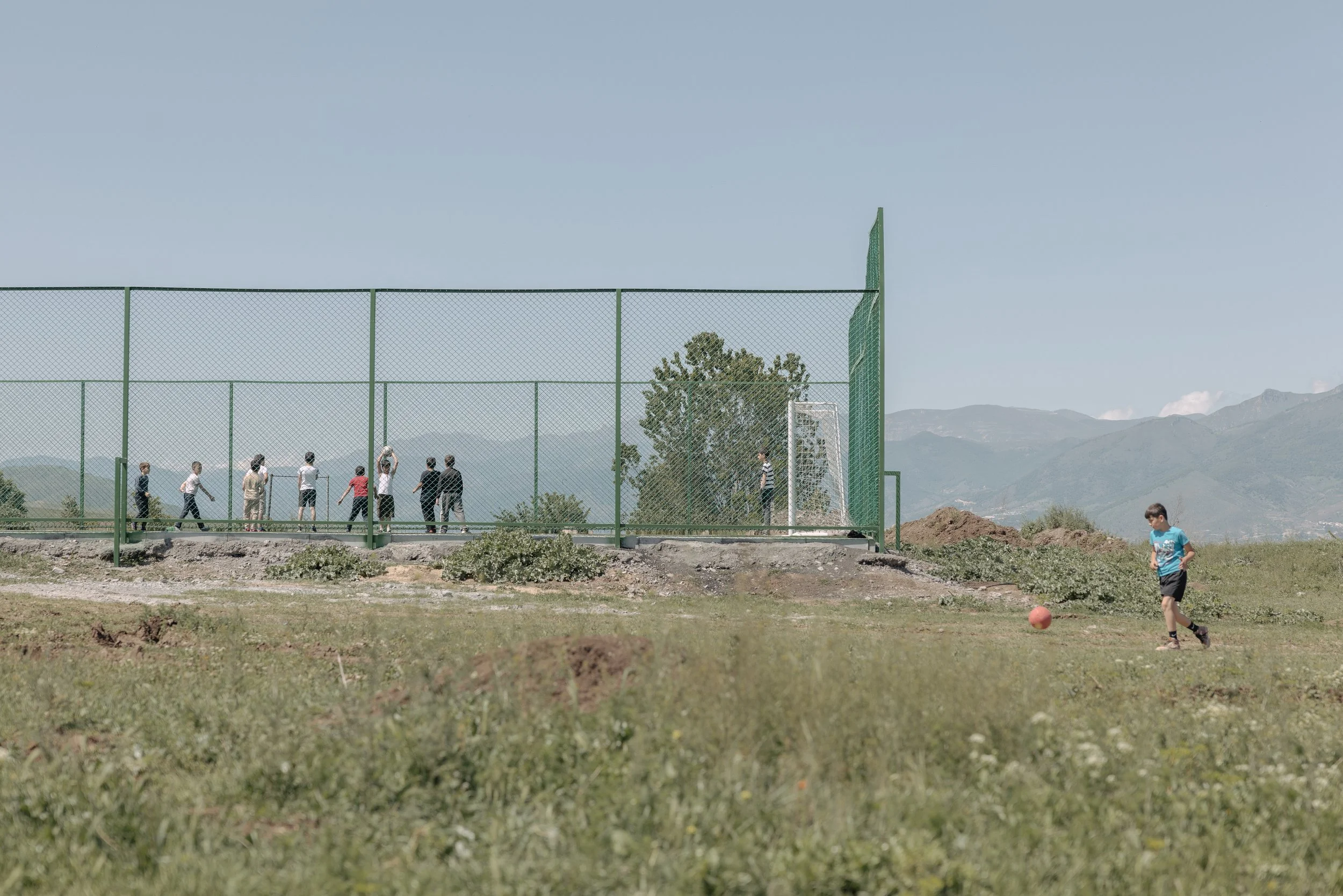
Children play in a humble roadside park in Kornidzor, Armenia, a village near the heavily militarized and strategically significant Lachin Corridor on 17 May 2025. The Corridor once served as the main link between Armenia and Nagorno-Karabakh. In September 2023, a rapid military offensive by Azerbaijan forced a mass exodus of ethnic Armenians from Nagorno‑Karabakh. Over 100,000 people crossed into Armenia in a matter of days, many arriving through Kornidzor and its adjacent mountain routes.
Today, while the laughter of children fills the playground, that very proximity to a route once marked by fear, displacement and uncertainty underscores the fragile calm that defines daily life in this quiet borderland community. The park is full of heavy memories of loss, uprooted lives, and the displacement of entire communities.
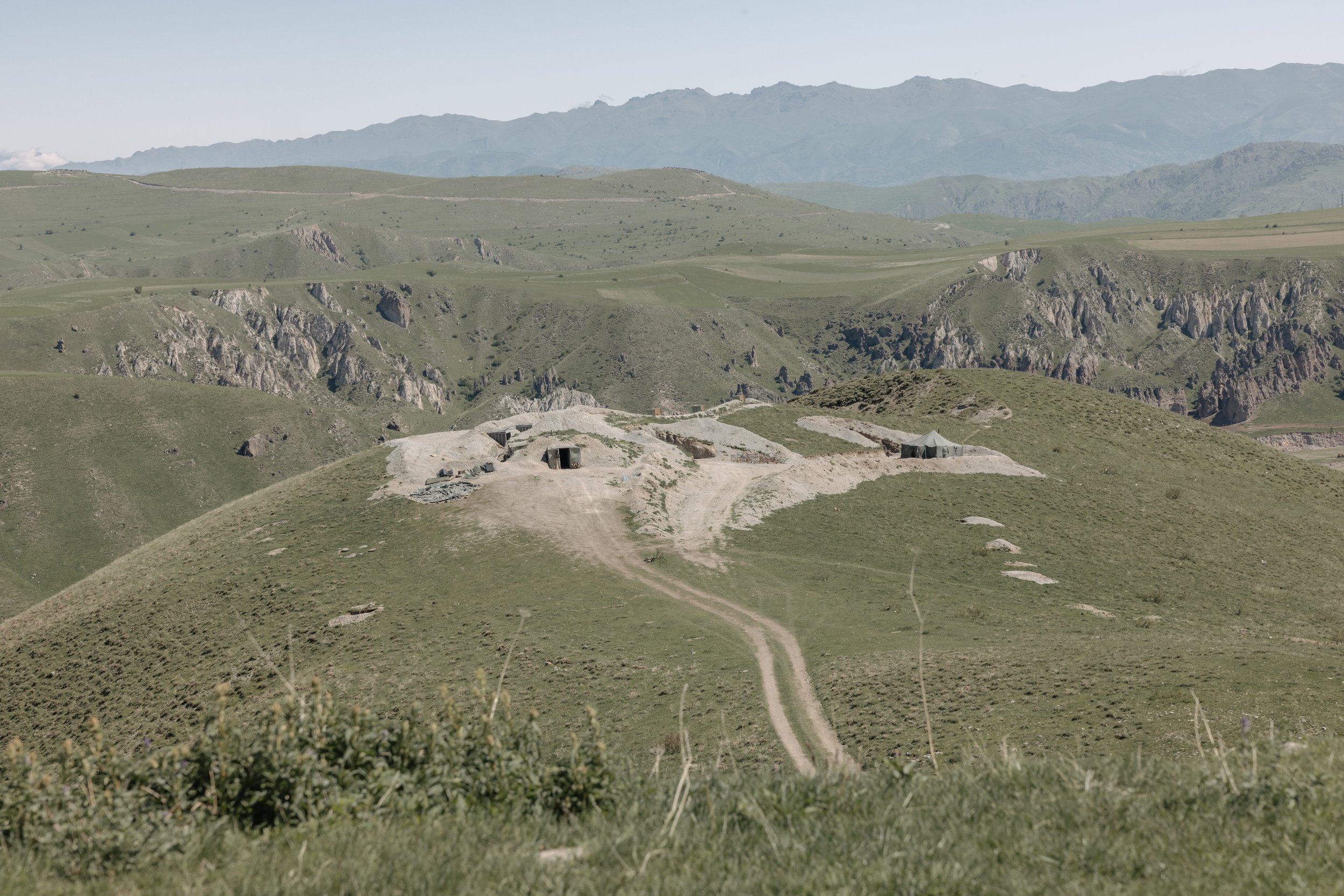
A military position overlooks Khoznavar, a small agriculture village in Armenia’s Syunik Province, on 17 May 2025. Surrounded on three sides by Azerbaijani military posts, the village has become increasingly vulnerable to cross-border fire. On 20 April 2025, Azerbaijani forces opened fire on Khoznavar, damaging a solar water heater on a residential building. While no casualties were reported, residents hear shots almost every night.
Home to around 350 people, Khoznavar is connected to the rest of Armenia by a single road, known locally as “the path to life.” Armenian authorities are upgrading the route to ensure faster movement for both military and civilian vehicles. The precarious geography, frequent cross-border incidents, and isolation of this frontier community highlight the fragile security and daily risks faced by its inhabitants prior to the August peace agreement reached between Armenia and Azerbaijan in Washington D.C.
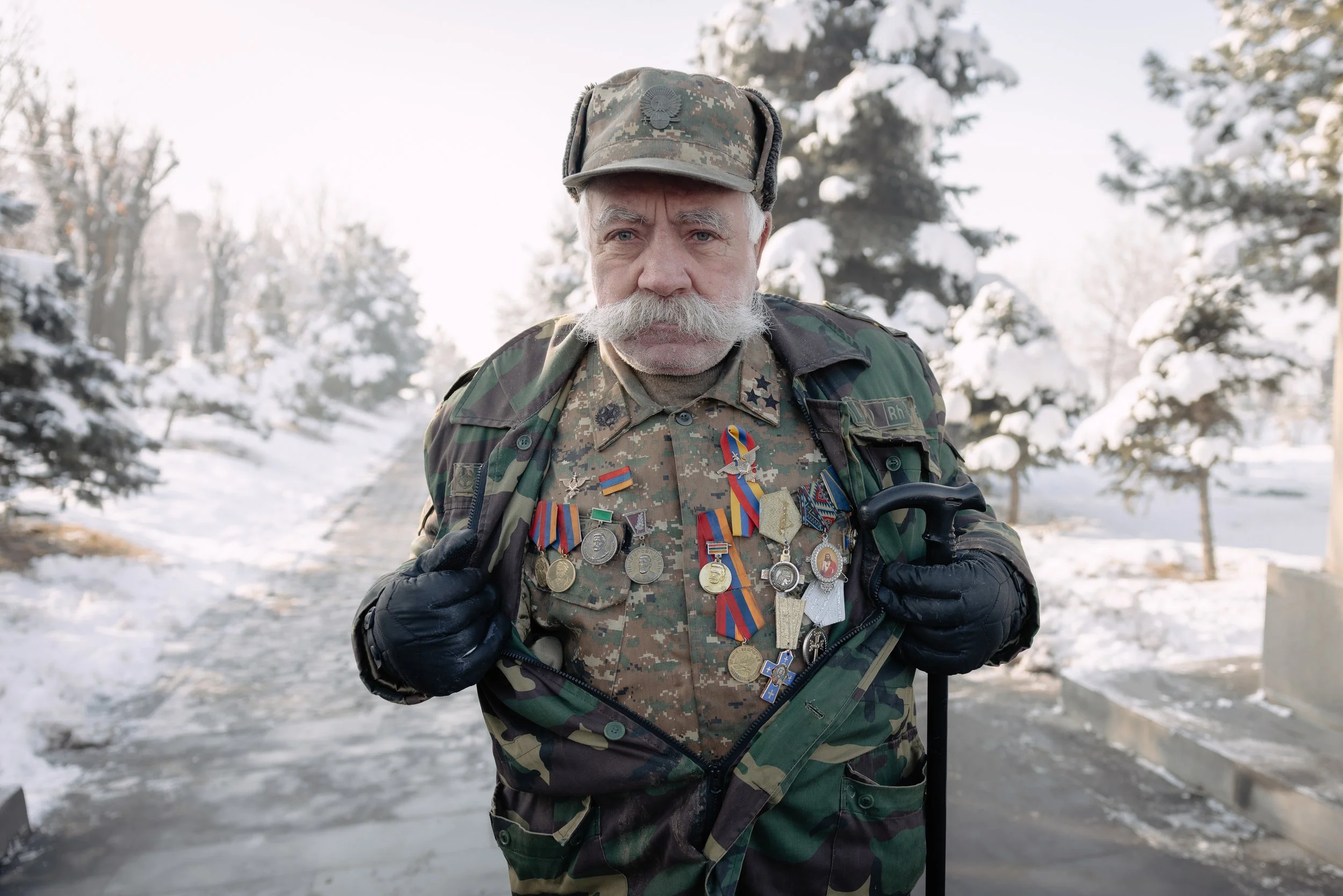
Ashot, a 75‑year‑old veteran originally from the historic Armenian region of Sasun (now in Turkey), shows the medals he earned in the First Nagorno‑Karabakh War during Army Day at Yerablur Cemetery in Yerevan on 28 January 2024. The medals tell a story of personal sacrifice where he was wounded in the leg during the conflict.
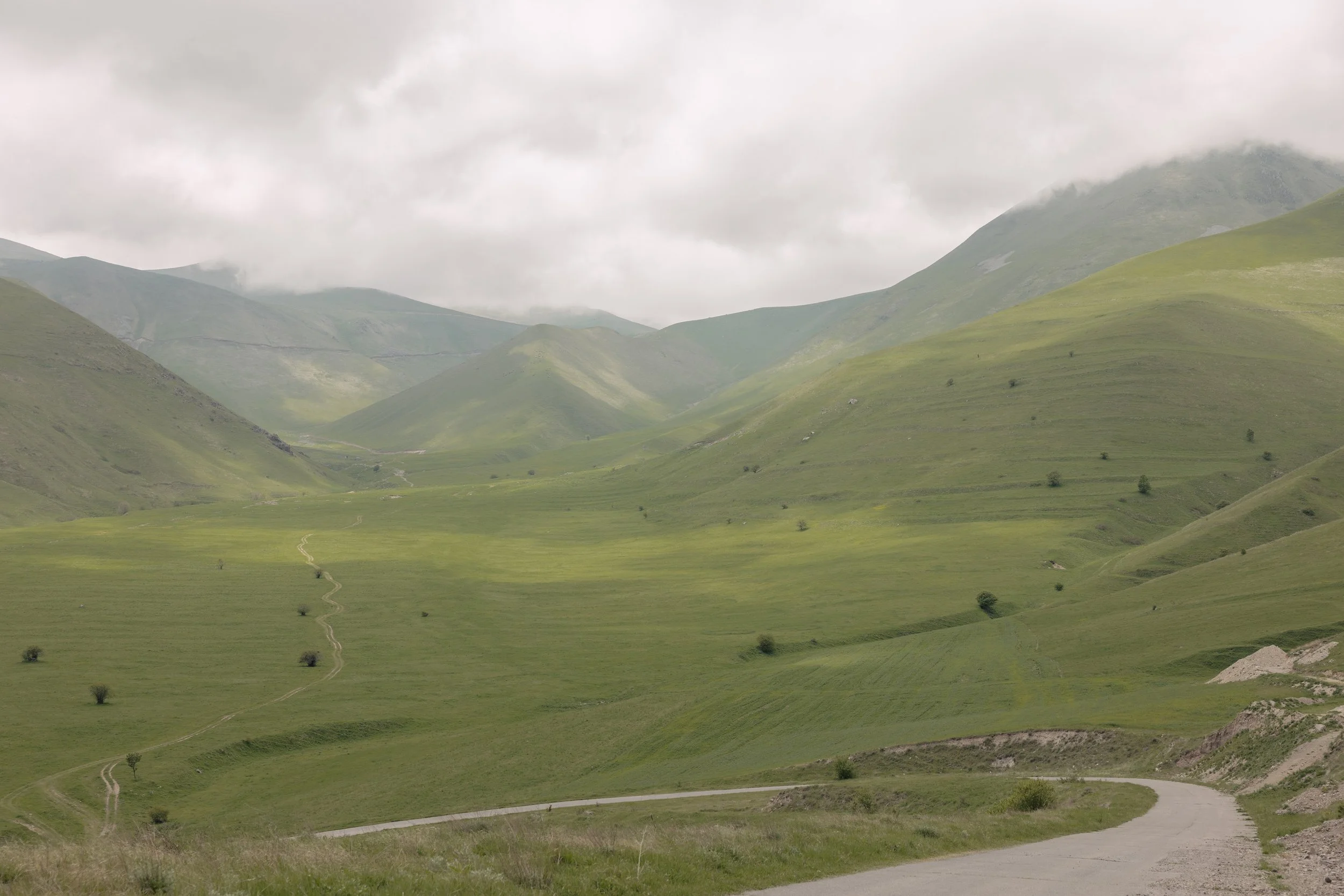
Between the border villages of Khoznavar and Khnatsakh in Armenia’s Syunik Province lies picturesque rough roads, dry earth, and hills that conceal more than they reveal on 17 May 2025. Though at first glance the scene appears calm, the calm is deceptive, Azerbaijani military positions lie just beyond the hills alongside Armenian positions, and the threat of sudden gunfire looms over this ground. Residents of these border areas have reported frequent shootings and cross‑border fire in recent months, underscoring the fragility of any lasting peace between the two neighbors.
For villagers navigating these remote areas, daily routines, tending to fields and livestock or visiting family, unfold under the constant shadow of border tensions. This photograph captures more than barren terrain; it reflects the fragile quiet of a region where peace can be shattered at any moment.
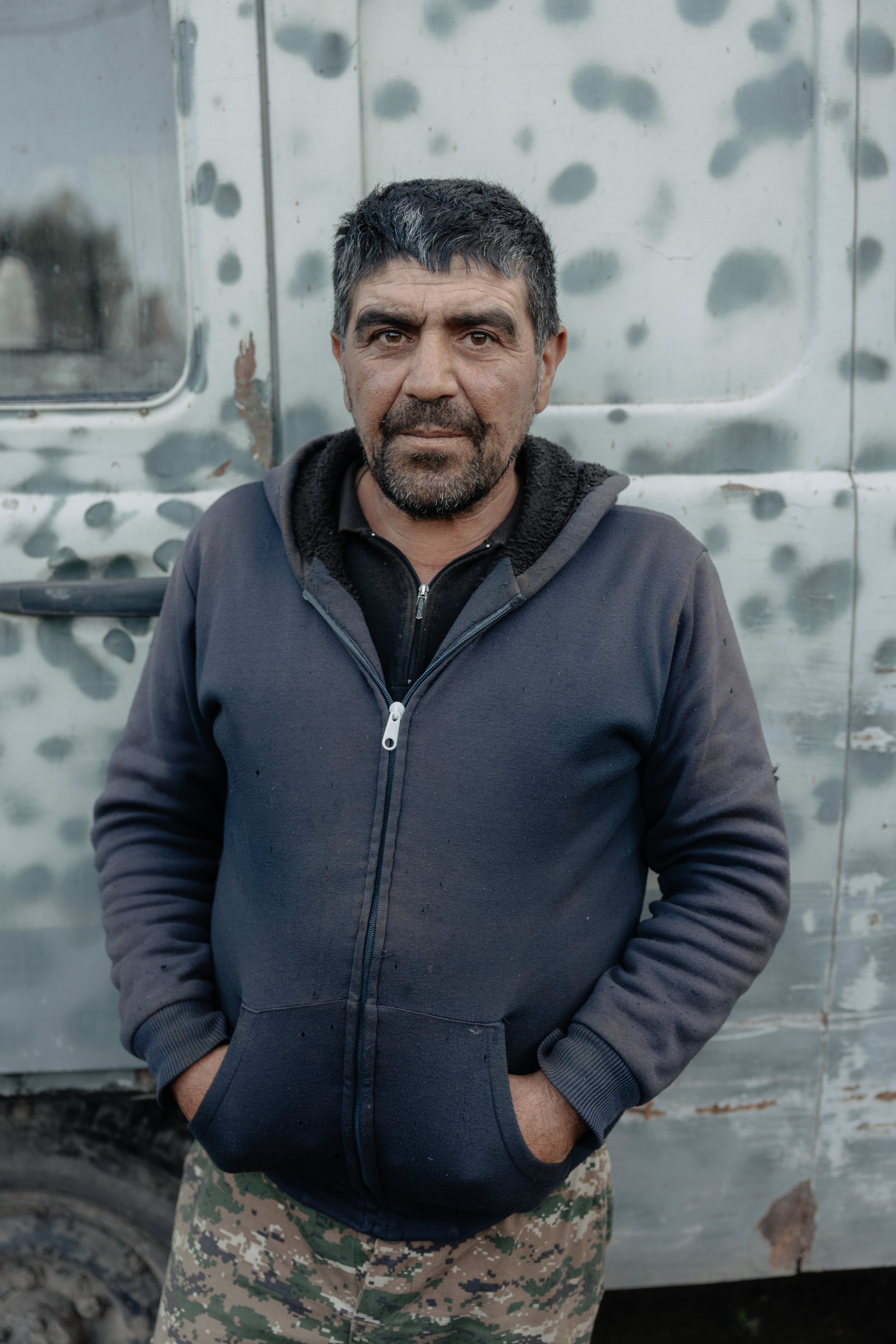
David Babayan, a father of seven, worked during the 2020 Nagorno-Karabakh war retrieving the bodies of fallen soldiers from battlefields in his UAZ‑452 van. He recalls the horrors of corpses lying in the fields for weeks, often torn apart by artillery fire, and the trauma of handling remains for identification. The conflict, which lasted 44 days, left deep scars across Nagorno-Karabakh and surrounding Armenian border regions, displacing thousands and leaving villages exposed to sudden violence.
Today, David works long hours as a construction laborer on a new school at the edge of Khnatsakh village, Syunik Province, on 16 May 2025. He raises four of his children, while the youngest attends kindergarten, and older children have married. His labor reflects a determination to rebuild and restore normalcy in a community that remains on edge. Despite a formal ceasefire and ongoing peace negotiations, uncertainty looms where both Armenia and Azerbaijan continue to fortify their border positions, and residents live under the constant threat of cross-border fire.
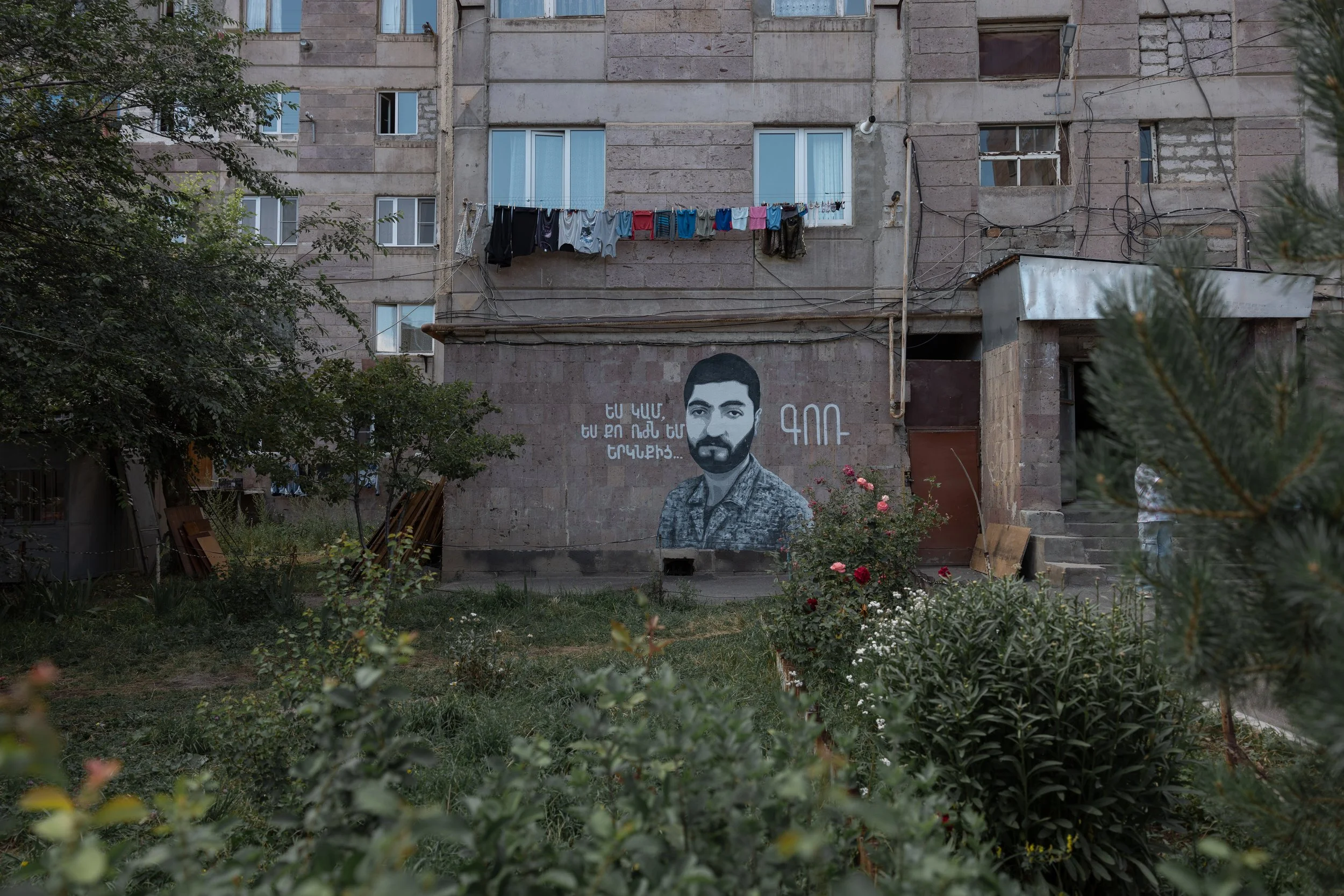
In Hrazdan, Armenia, on 28 July 2024, a painting bearing the name and likeness of Gor, a soldier killed in conflict between Armenia and Azerbaijan. The mural is inscribed with the words: “I exist, I am your strength from heaven.” Villagers remember Gor as a symbol of sacrifice, resilience, and the human cost of a war that left deep scars across the nation.
This mural is part of a broader wave of remembrance that swept across Armenia after the 2020 war and other recent conflicts. Across cities and villages — from large urban centers to remote towns portraits of fallen soldiers have begun to appear on walls, schools, homes and public buildings.
These murals serve more than decorative or symbolic purposes: they are communal markers of grief, memory, and national mourning of collective sorrow and solidarity. Many such portraits are painted by relatives, friends or community members, transforming ordinary walls into sites of public memory.
Gor’s mural stands at the intersection of memory and mourning, not simply a wall painting but a testament to lives lost, a reflection of grief, and a call for remembrance in a society still coping with the ripple effects of war.
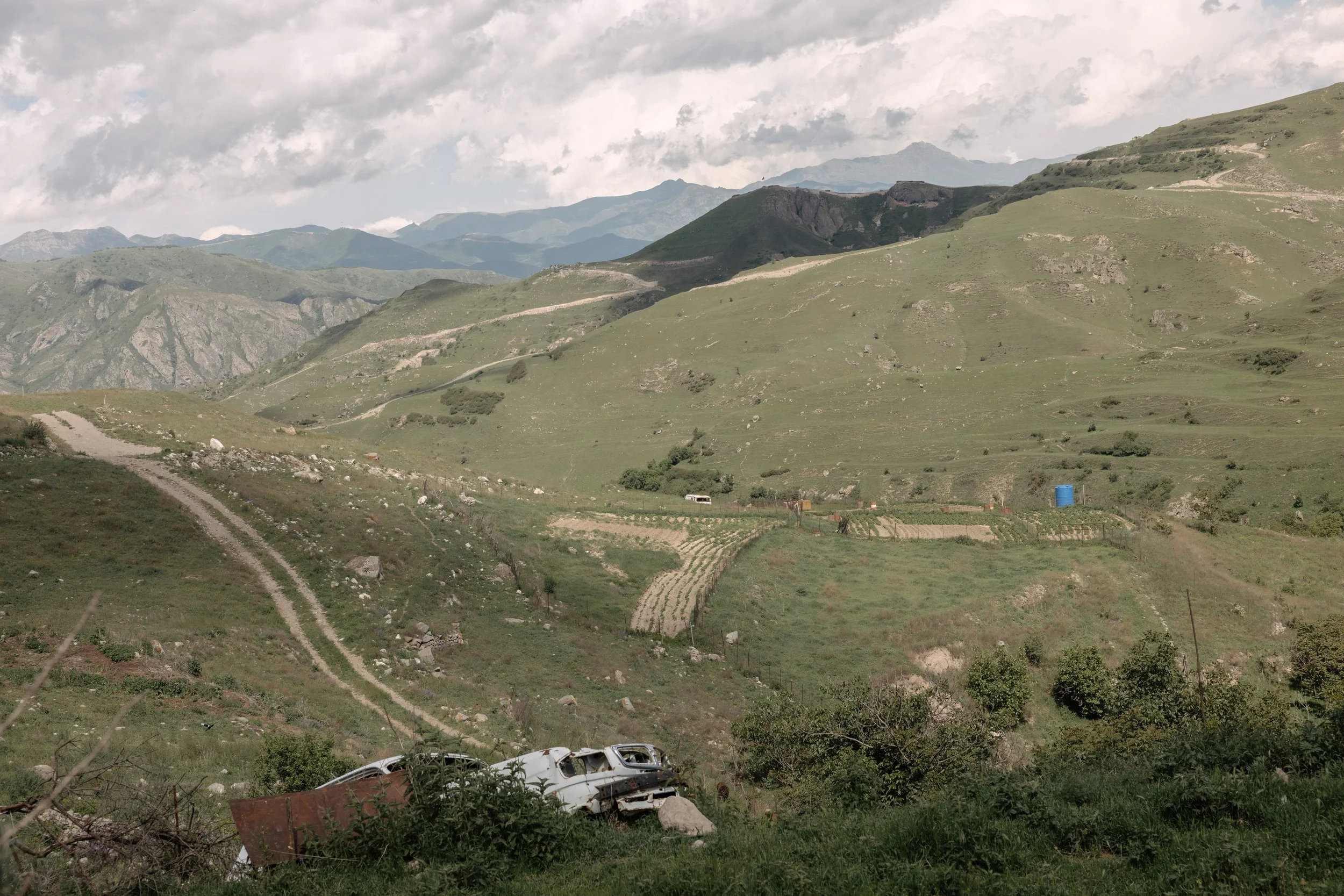
The hills around Khnatsakh village in Syunik Province, Armenia, on May 16, 2025, reveal the village’s precarious position, hemmed in by Azerbaijani military posts on several sides. According to residents, shooting had been heard repeatedly over recent weeks, leaving people living under constant threat and leading some residents to leave the village and their livelihoods and work there. The exposed terrain underscores the ongoing volatility and danger along the Armenia–Azerbaijan border despite official ceasefire agreements which highlighted how border communities continue to bear the human consequences of broader geopolitical tensions.
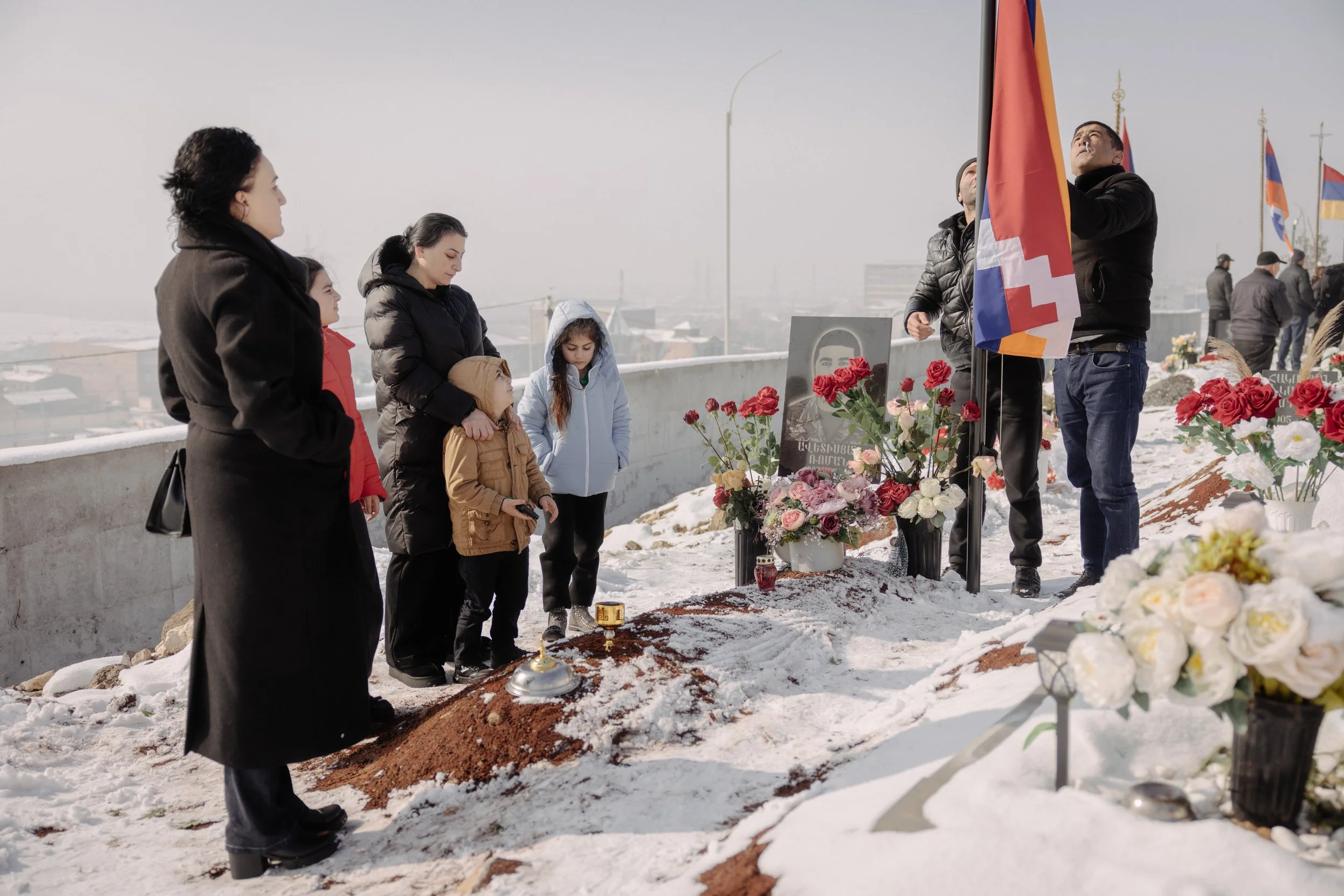
On 28 January 2024, a family gathers at the grave of their father at Yerablur Military Memorial Cemetery in Yerevan, Armenia, one of many victims of the 2023 conflict in Nagorno-Karabakh. In September 2023, a swift military offensive by Azerbaijan against Nagorno‑Karabakh triggered a mass exodus of ethnic Armenians, with more than 100,000 people forced to flee their homes and ancestral lands.
The grief of this family reflects not just personal loss, but the human cost borne by thousands who saw their communities uprooted, families severed, and identities displaced in just a few days. The cemetery has been a burial place of Armenian soldiers beginning in 1988 when the first Nagorno-Karabakh conflict broke out, which is now filled with over 3 decades of soldiers, many as young as 18 years old. This image captures the other side of war and the collective wounds of a nation, underlining how the aftermath of conflict reshapes lives, memories and futures for entire populations long after the fighting ends.